REVIEW · MARSEILLE
Marseille: cityrando Le Vieux-Port Le Panier La Joliette
Book on GetYourGuide →Operated by Le Bon Trip · Bookable on GetYourGuide
Marseille can feel like two cities at once. This Old Port to MuCEM walk pulls together the harbor’s daily rhythm, the hilltop landmarks, and the modern pull of La Joliette in one smooth arc. I especially like that the tour is built around neighborhood storytelling, not just check-the-box sights, and that the guide brings practical context and easy anecdotes as you go (Stéphane and Irkan are names that come up a lot). The pace is walk-forward and you will be doing real streets, so you’ll want solid shoes.
One possible drawback: food and drinks aren’t included, even though there are food-tasting moments on the route. Plan a budget for lunch/snacks so you do not feel stuck when you get hungry near the markets and shopping areas.
In This Review
- Key points to know before you go
- Why This Marseille Cityrando From Vieux-Port to MuCEM Makes Sense
- Meeting at Marché aux Poissons: How the Start Plays Out
- Old Port (Vieux-Port) and the Fish Market Start: Marseille’s Daily Pulse
- Le Panier’s Tight Streets and Street Art Energy
- Marseille Cathedral Photo Stop: Quick, Worth It
- La Joliette’s Redevelopment: Silo d’Arenc and Les Terrasses du Port
- MuCEM and Passerelle Saint-Jean: The Best Sea Views on the Route
- Price and Value: Is 34 USD Actually a Good Deal?
- Pace, Walking Reality, and What to Wear
- Who This Tour Fits Best (and Who Might Want Another Plan)
- If You Get Stéphane or Irkan: What to Expect From the Guide
- Should You Book This Marseille Walk or Skip It?
- FAQ
- What is the duration of the Marseille cityrando?
- How much does it cost?
- Where does the tour start?
- What’s included in the price?
- Do I need hotel pickup or drop-off?
- What languages are available?
- Is it wheelchair accessible?
- What is the cancellation window?
Key points to know before you go
- Small group (up to 10) means more time to ask questions without feeling rushed
- Marché aux Poissons is a smart starting point for Marseille’s food-and-sea story
- Le Panier + Vieille Charité gives you old stones and culture, not just photo corners
- La Joliette’s Silo d’Arenc and rooftop terraces add a modern contrast to the harbor
- MuCEM and Passerelle Saint-Jean deliver big sea-and-port views with easy walking between stops
Why This Marseille Cityrando From Vieux-Port to MuCEM Makes Sense
This tour is for you if you want Marseille to make sense fast. You start at the working heart of the city and then move through neighborhoods that each explain a different chapter—harbor life, hilltop neighborhoods, redevelopment, and contemporary culture.
What makes the route work is the way it mixes sight time with short guided stops. You are not just walking past things; you get a simple story for each area as you transition from one atmosphere to the next.
And if you care about getting answers, you are in the right place. Multiple guides for this experience are praised for being generous with questions and for explaining with real examples instead of vague facts.
If you're still narrowing it down, here are other tours in Marseille we've reviewed.


Meeting at Marché aux Poissons: How the Start Plays Out
You meet at Marché aux Poissons, the fish market area. It is a great anchor because it immediately places you in Marseille’s maritime reality, not in some generic tourist zone.
Bring your voucher and show it to the guide before you start. The guide waits at the meeting point under the company name Le Bon Trip, so look for that name when you arrive.
You should also plan for the fact that this is a guided walk, not a sit-and-stare tour. You’ll move through several areas over the day, so water and comfortable footwear matter more than you might think.
Old Port (Vieux-Port) and the Fish Market Start: Marseille’s Daily Pulse
The day begins at the harbor, with the promenade acting like your front-row seat. You’ll see the waterfront activity that has made this place central for centuries.
Expect a strong sense of daily rhythm here. The fish market gives you a real Marseille vibe—busy but practical, focused on what people are buying and doing right now.
The guide also sets up the viewpoint story early, including the nearby hilltop landmark: Notre-Dame de la Garde. You do not have to do a full hike to appreciate it, because your route helps you connect the sea-level city to the high-level icon that sits above it.
Le Panier’s Tight Streets and Street Art Energy
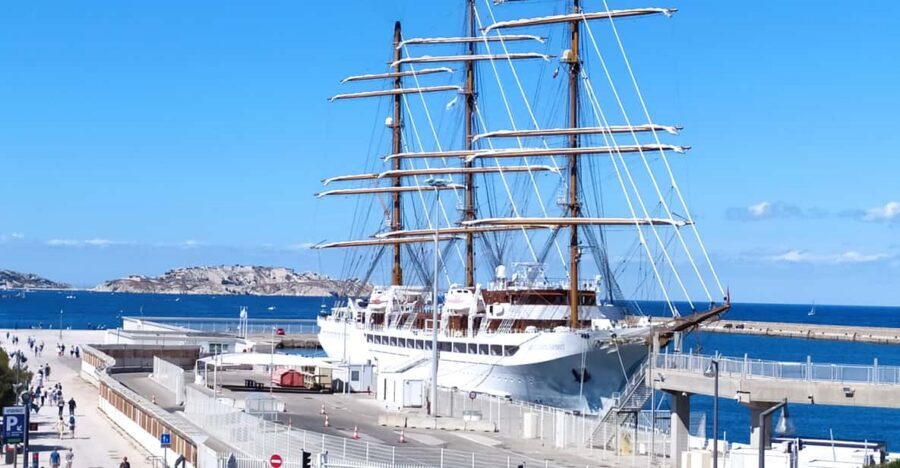
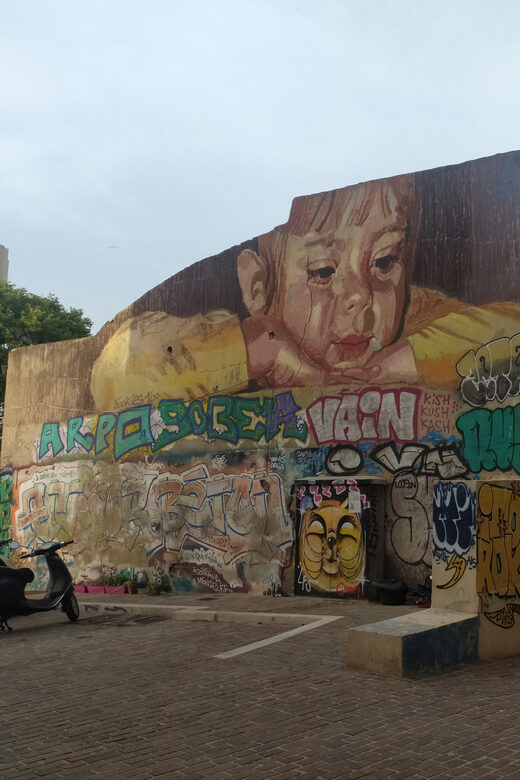
After the harbor, you move into Le Panier, the hill neighborhood just north of the Old Port. This is the part of the walk where the city gets visually fun fast: narrow lanes, little squares, and street art that feels like it belongs to the walls, not pasted onto them.
On foot, Le Panier is all about getting your bearings. The streets twist, and that is the point. A good guide helps you understand how the neighborhood grew and why these lanes still feel like a maze.
This stop also includes a visit to Vieille Charité, a major highlight. It started as a 17th-century almshouse and now functions as a cultural center. You’ll be able to connect Marseille’s past to the present through the space itself, not just a description.
If you like architecture and small-scale urban surprises, you will appreciate this portion most. It is easy to slow down here, especially if the guide shares the background behind what you see.
Marseille Cathedral Photo Stop: Quick, Worth It
Next comes a photo stop and a visit at Marseille Cathedral. This is not the longest stop on the route, but it plays a useful role.
It gives you a visual checkpoint in the middle of the day. When you step away from the tighter street network and look at a larger landmark, your sense of Marseille’s layout improves.
Also, a cathedral area is a good moment to pause and re-center. If you’ve been walking and snapping photos nonstop, this kind of “reset stop” helps you actually notice details instead of just collecting images.



La Joliette’s Redevelopment: Silo d’Arenc and Les Terrasses du Port
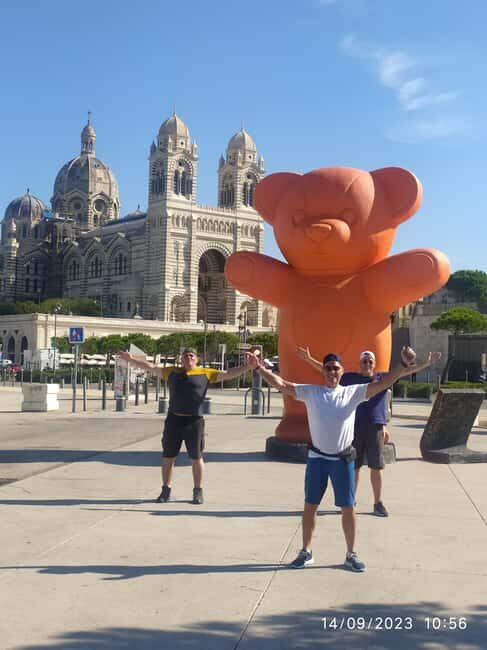
Then you head toward La Joliette, Marseille’s commercial zone and redevelopment story. This is a smart switch because it contrasts sharply with Le Panier’s older feel.
You’ll see how modern Marseille can still respect the past through reuse. One of the clearest examples is Silo d’Arenc, a former grain silo turned cultural venue. The structure gives you an immediate lesson: industry and culture can occupy the same walls.
From there, you get Les Terrasses du Port, a shopping center with a rooftop designed for views. If you like looking outward and figuring out how everything connects, this is your moment. The sea and city lines become easier to read when you can see from above.
If you are shopping-minded, this area is also where you’ll naturally find more options. If you are not, it still works because the rooftop views are a sightseeing win even without buying anything.
MuCEM and Passerelle Saint-Jean: The Best Sea Views on the Route
The final stretch focuses on one of Marseille’s most recognizable contemporary landmarks: the Museum of European and Mediterranean Civilisations (MuCEM).
MuCEM is known for being visually striking. Here, it is not just a museum label. It acts as the cultural capstone for the day, linking the harbor, the region, and the modern city into one place.
After you visit, you cross the Passerelle Saint-Jean, an elevated connection that links MuCEM to Fort Saint-Jean. The footbridge is where the walk becomes a viewpoint experience.
You’ll get panoramic views back toward the Old Port and out over the sea. This is the part that makes the entire day feel “complete,” because you see the city in one big frame instead of a sequence of separate neighborhoods.
Price and Value: Is 34 USD Actually a Good Deal?
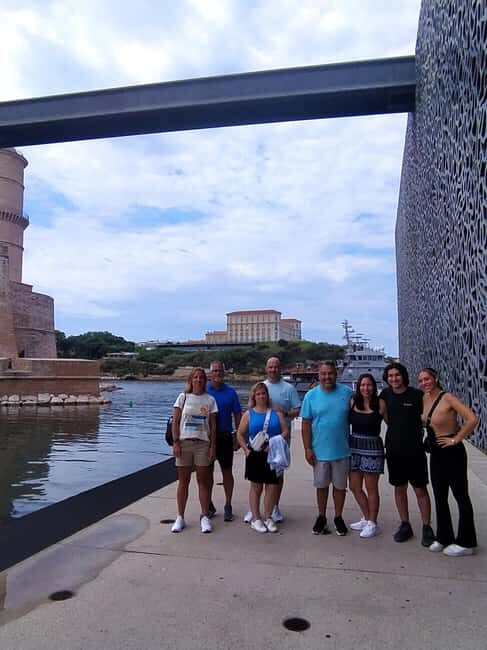
At $34 per person for a 1-day guided walk, the key question is not just cost—it’s value for how much ground you cover and how much explanation you get.
This price usually makes sense because:
- you get a private guide experience (with a small group up to 10)
- you cover multiple districts in one day
- you receive guided context that helps you understand what you’re seeing, especially in places like Le Panier and MuCEM
Where people can feel surprised is spending. Food and drinks are not included, so when the route offers food-tasting moments, you’ll want extra cash or a planned lunch. This tour is a good value if you treat it like a sightseeing day that still needs a meal budget.
Pace, Walking Reality, and What to Wear
This is a walking-focused cityrando. Even without a guaranteed distance listed, one verified experience notes about four hours and roughly 10 km for the walk. That tells you what to expect in physical effort.
I recommend:
- comfortable shoes you trust on uneven pavement
- a light layer for coastal breezes
- water, since you are not buying it as part of the included package
The upside is that a walk lets you feel neighborhoods in real time. The downside is you cannot treat this like a relaxed stroll through a single museum.
Who This Tour Fits Best (and Who Might Want Another Plan)
This works best if you:
- want a guided introduction to Marseille’s major areas in one day
- enjoy history explained through streets, not just plaques
- like balancing older neighborhoods with modern redevelopment
- care about viewpoints and photo-friendly stops
It may not be ideal if you:
- want a low-walking day with minimal movement
- expect food to be covered end to end
- prefer a deeper museum day with lots of sit-down time
Still, for most visitors, the mix is exactly the point. Old Port and Le Panier give you the city’s textures. La Joliette and MuCEM give you the city’s shape and direction.
If You Get Stéphane or Irkan: What to Expect From the Guide
One standout theme: the guides are praised for being enthusiastic and for answering questions without making it feel like a lecture. Stéphane in particular is described as very kind, very informed, and willing to take time to explain clearly.
Irkan also comes up with notes about a smooth, knowledgeable walk. In short, you are not just receiving a route. You are getting a real conversation with the city through your guide’s eyes.
If you are the type who loves asking why a place looks the way it does, you will likely feel well looked after on this tour.
Should You Book This Marseille Walk or Skip It?
Book it if you want a practical introduction to Marseille’s main districts—Old Port, Le Panier, La Joliette, and the MuCEM waterfront area—without doing separate planning for each stop. The sea views from MuCEM and the bridge connection are the payoff that justifies the walking.
Skip it if you already have a tight plan focused only on one neighborhood or if you want museums with more time inside and fewer street transitions. Also skip if you do not want to handle your own lunch and snacks.
If you want the fastest path to feeling like you understand Marseille after your first day, this cityrando is a strong pick.
FAQ
What is the duration of the Marseille cityrando?
The tour duration is 1 day.
How much does it cost?
The price is $34 per person.
Where does the tour start?
The meeting point is Marché aux Poissons.
What’s included in the price?
A private guide is included. Food and drinks are not included.
Do I need hotel pickup or drop-off?
No. Hotel pickup and drop-off are not included.
What languages are available?
The live tour guide is available in English and French.
Is it wheelchair accessible?
Yes, the tour is listed as wheelchair accessible.
What is the cancellation window?
Free cancellation is available up to 24 hours in advance for a full refund.