REVIEW · MARSEILLE
Marseille: Mucem Skip-the-Line Entry Ticket
Book on GetYourGuide →Operated by Distributor: GetYourGuide Tours & Tickets GmbH · Bookable on GetYourGuide
A museum built for the sea. This skip-the-line Mucem ticket gets you into one of Marseille’s most talked-about museums without burning time in queues.
What I like most is the Mediterranean-focused exhibitions that connect history, art, and everyday culture in ways that make sense. I also love the building itself: long corridors, bright light, and those port-and-sea views.
One watch-out: if you plan to eat at the museum, don’t expect everyone to love the cafe food. Some bites are more complex than a quick, simple snack.
In This Review
- Key takeaways before you go
- First stop: what makes Mucem special in Marseille
- Price and value: is $13 a good deal for this ticket?
- Where to meet and what a one-day visit really means
- Timing tip: arrive before 1:00 PM for the best visiting conditions
- Inside the museum: how the Mediterranean story is told
- Rudy Ricciotti’s architecture: sea views and photo-worthy corridors
- Fashion Folklore: why this exhibition works for real people
- Audio guide option: how to use it without getting bogged down
- Pair it with Marseille time: Old Port, Le Panier, and viewpoints
- What to expect from your pace and priorities
- Who this ticket is best for (and who might pass)
- Café reality check: quick food may not be your thing
- Should you book this skip-the-line Mucem ticket?
- FAQ
- How long is this ticket valid?
- Does this entry ticket help me avoid lines?
- Where do I meet for the ticket?
- What time should I aim to arrive for the best experience?
- What languages is the audio guide available in?
- Is the museum closed on any day?
Key takeaways before you go
- Skip-the-line entry so you can start exploring sooner
- Mediterranean Civilizations exhibitions mixing history, anthropology, and art
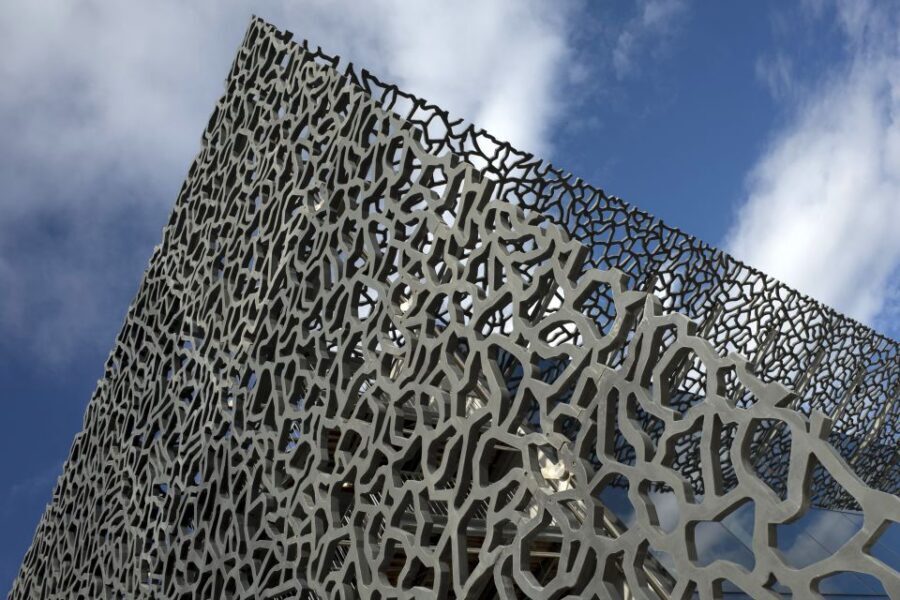
- Rudy Ricciotti architecture with standout views over the Old Port
- Audio guide option in several languages for different exhibition areas
- Plan for timing: arrive before 1:00 PM for better conditions
- Museum is closed Tuesday so plan around the calendar
First stop: what makes Mucem special in Marseille
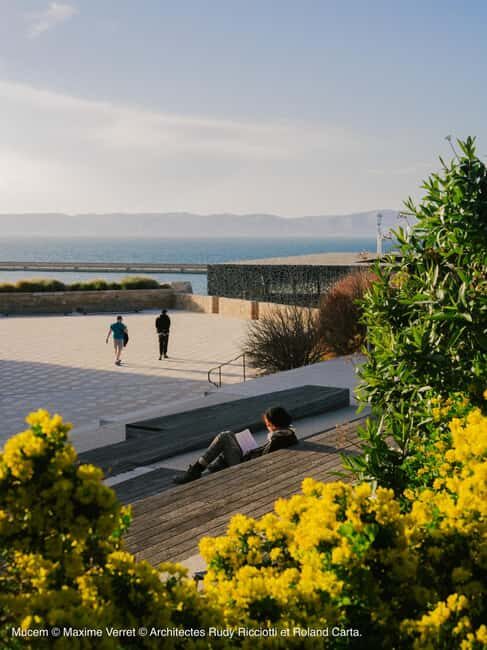
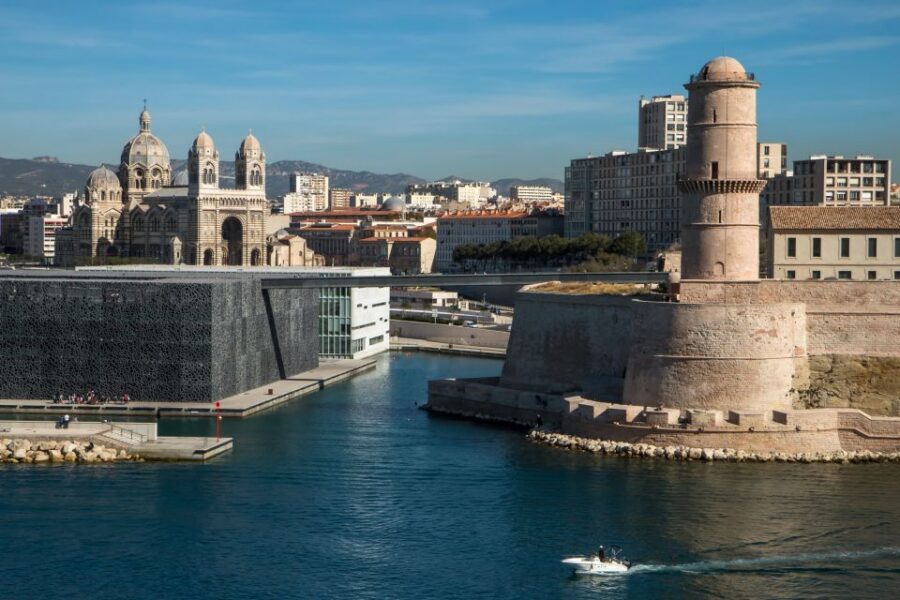
Mucem sits right where the city meets the Mediterranean, so it doesn’t feel like a museum dropped into town. It feels like part of the coastline. The skip-the-line part matters too, because Marseille can mean crowds, and museums rarely run on anyone’s schedule except their own.
Once inside, the experience is built around two big ideas. First, the museum’s exhibitions focus on the Mediterranean world and how it has talked to Europe over centuries. Second, the architecture by Rudy Ricciotti makes your visit about more than just galleries. You constantly get visual breaks—especially as you move through corridors that frame the Old Port and sea.
If you’re the type who likes museum visits that feel like a guided conversation rather than a checklist, you’ll enjoy how the displays combine different fields. You’re not only looking at artifacts; you’re also seeing how people lived, traded, dressed, built, and imagined. That blend is one reason the museum has grown into a major stop for Marseille.
Other museum and attraction tickets in Marseille

Price and value: is $13 a good deal for this ticket?
At about $13 per person, this ticket feels like fair value for a top-tier museum stop—especially because it’s a skip-the-line entry. In plain terms: time is part of what you’re buying. You’re also covering entry to the museum and its exhibitions for a full one-day window.
A lot of museum pricing is basically paying for the entrance and hoping you’ll spend enough time inside to justify it. Here, you’re also paying for efficiency. If you show up during a busy stretch, the line can eat half your morning or afternoon. This ticket helps you use that time for actual viewing instead of queue management.
You may also be thinking about the audio guide. If you select it, you get an audio guide in multiple languages, with different coverage depending on which part of the museum you’re in. That can be worth it if you like context and explanation while you walk.
Where to meet and what a one-day visit really means
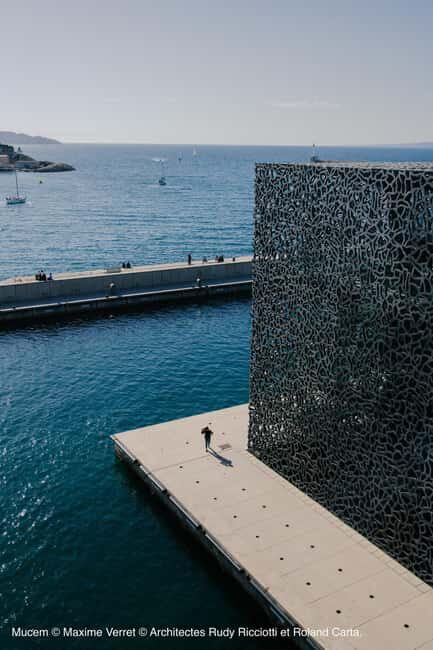
Your meeting point is Mucem, 7 Promenade Robert Laffont, 13002 Marseille. The ticket is valid for 1 day, but it’s also tied to starting times, so you’ll want to pick the time that matches your pace.
Don’t over-plan it. One day is enough if your goal is two things: see the main exhibition areas and spend real time in the spaces that catch your eye. If you try to rush everything, Mucem will feel bigger than you expected—because it is. It’s a roomy site, and you’ll likely want breaks.
Also keep the weekly rhythm in mind: the museum is closed every Tuesday. If your trip falls on Tuesday, you’ll need a backup plan. The museum’s busiest hours tend to be the earlier part of the day, so timing matters.
Timing tip: arrive before 1:00 PM for the best visiting conditions
The museum suggests arriving before 1:00 PM for the best visiting conditions. That advice is practical. Museums get crowded, and crowding affects how long you can spend looking closely. It also changes how comfortable it is to move through exhibition spaces without constantly squeezing past other visitors.
So if you can choose between a late morning and an afternoon slot, I’d pick earlier. You’ll likely get more breathing room, and you’ll also enjoy the outdoor sightlines from inside the building when the light is at its best.
If you’re traveling with a flexible schedule, this is where you’ll win. Pick an earlier start, then let the rest of your day flow.
Inside the museum: how the Mediterranean story is told
Mucem’s core promise is simple: it helps you understand the history and culture of the Mediterranean basin, and it does it with a mix of disciplines. You’ll see exhibition styles that lean into anthropology, history, archaeology, and art history, plus contemporary art.
What I like about that approach is that it respects how the Mediterranean really works. It’s not one neat culture. It’s contact zones: ports, migrations, trades, empires, and everyday people. The museum’s structure mirrors that complexity without turning it into chaos.
As you walk through the galleries, expect a lot of emphasis on connections—how ideas travel, how styles change, and how cultural borders stay porous. That theme also shows up in special exhibitions, which bring in specific subjects rather than only keeping everything broad.
If you’re short on time, don’t feel guilty skipping every single display label. Pick one or two exhibitions to anchor your visit, then let the rest of the museum support your main story.
A few more Marseille tours and experiences worth a look
Rudy Ricciotti’s architecture: sea views and photo-worthy corridors
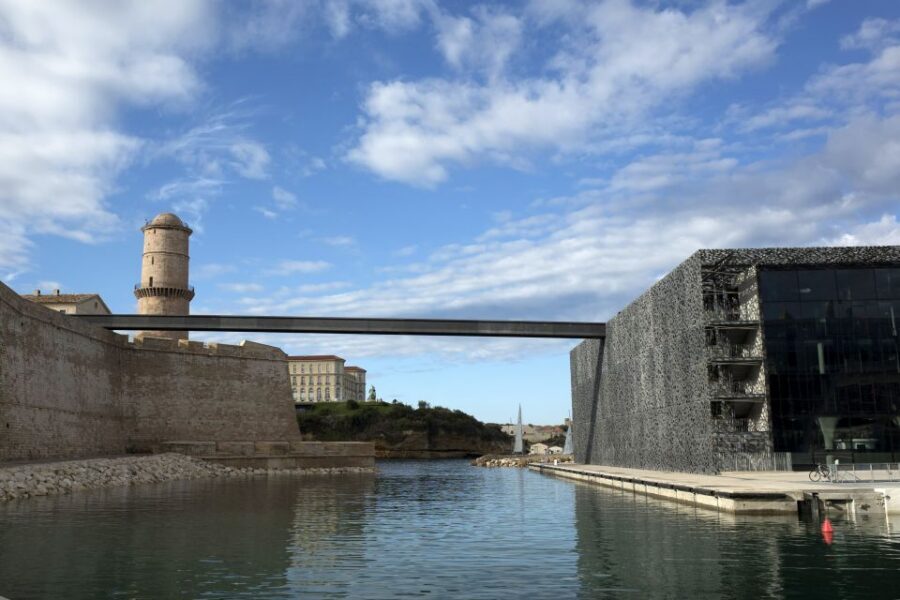
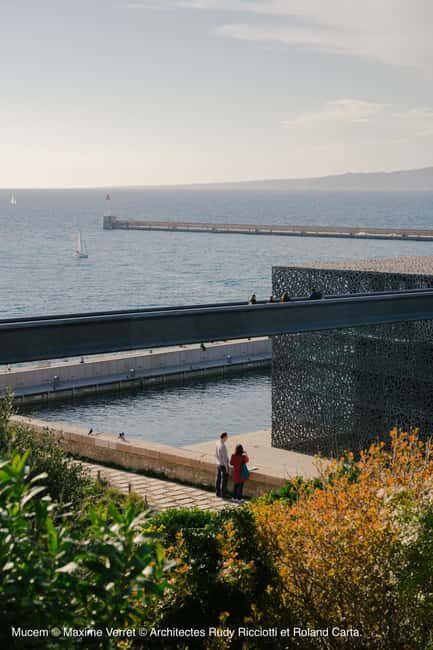
The building designed by Rudy Ricciotti is one of the big reasons people fall for Mucem. It isn’t just pretty from the outside. Inside, the layout gives you frequent sightlines, including views toward the Old Port and the Mediterranean Sea.
This is where the skip-the-line ticket starts paying you back immediately. If you’re stuck in a line, you lose that first wave of momentum and light. With a faster entry, you’re more likely to hit the best viewing moments while your energy is high.
You’ll also notice how the site connects the museum feeling to the wider area around it. In fact, it’s easy to keep walking after your museum time. One useful strategy: after you finish inside, stay in “photo and stroll mode” instead of rushing back to your hotel.
Fashion Folklore: why this exhibition works for real people
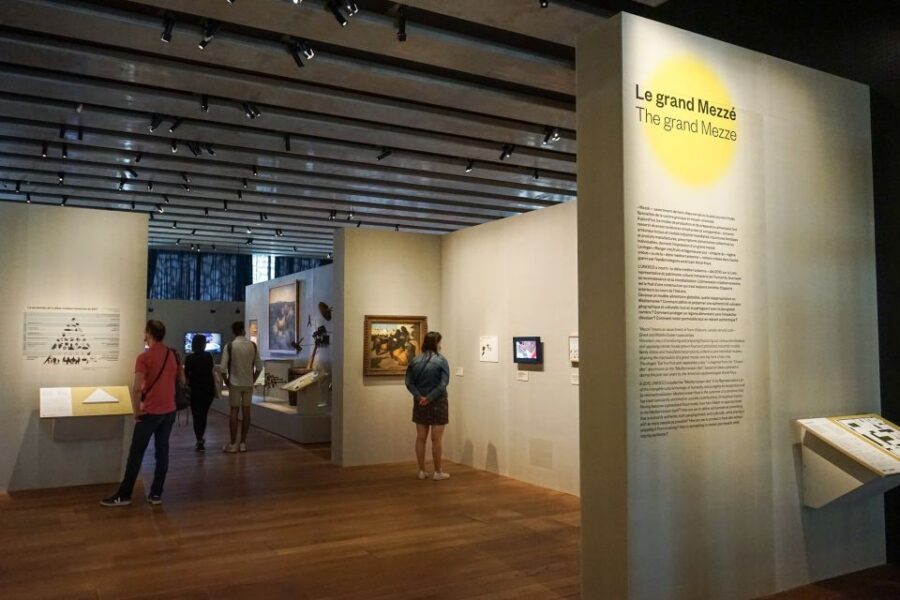
One of the highlighted exhibitions is Fashion Folklore. The idea is clever: haute couture didn’t develop in a vacuum. Designers drew from popular costume, folklore, and overlooked influences—especially across the 20th century.
This exhibition centers on textiles, and that makes a difference. Fabric and clothing are one of the most direct ways cultures talk to each other. People wear ideas on their bodies. Patterns, materials, and cuts carry meaning. And because the museum includes textile collections as the heart of the show, you get to see how the details matter.
What I appreciated is the way the exhibition frames connections over time. It doesn’t treat tradition as museum-still. It treats it as material that designers can reinterpret, including through contemporary costume design.
If you like fashion history, you’ll probably spend extra time here. If you don’t usually care about clothing exhibits, you might still enjoy this one because it’s really about cultural exchange.
Audio guide option: how to use it without getting bogged down
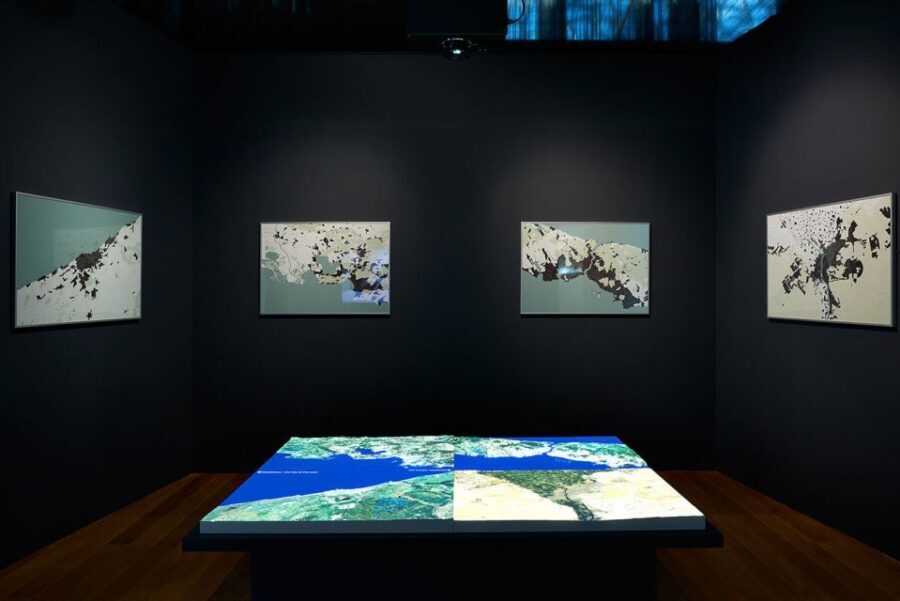
The ticket can include an audio guide if you select it. It’s offered in English and French, and it also includes Spanish, Italian, and German for certain areas.
Here’s the practical breakdown based on what the audio guide covers:
- For outdoor exhibitions, the audio guide is available in French, English, Spanish, Italian, and German.
- For indoor exhibitions (two of them), it’s available in French and English.
You’ll want to use your audio guide strategically. Don’t press play for everything. Instead, turn it on when you’re standing still and ready to read slowly. That’s when it turns the museum from a walk-through into a learning experience.
If you’re the kind of traveler who likes to go at your own speed, you might find the audio guide helpful as a filter. You’ll keep moving, but you’ll also get enough context to understand what you’re seeing.
One extra note: there’s also a visit app you can download from the Mucem website, but it’s not included with the ticket. If you prefer phone-based guidance, you can grab it, but it’s not required to enjoy the museum.
Pair it with Marseille time: Old Port, Le Panier, and viewpoints
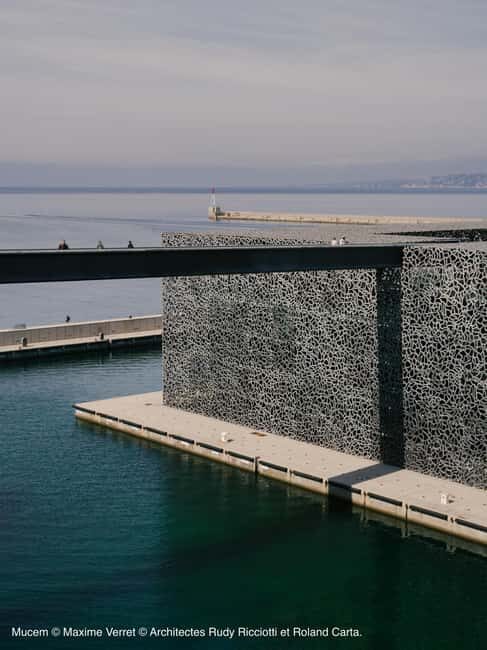
The museum sits in a part of Marseille that’s made for walking. After your visit, you can keep the day going with nearby neighborhoods and viewpoints.
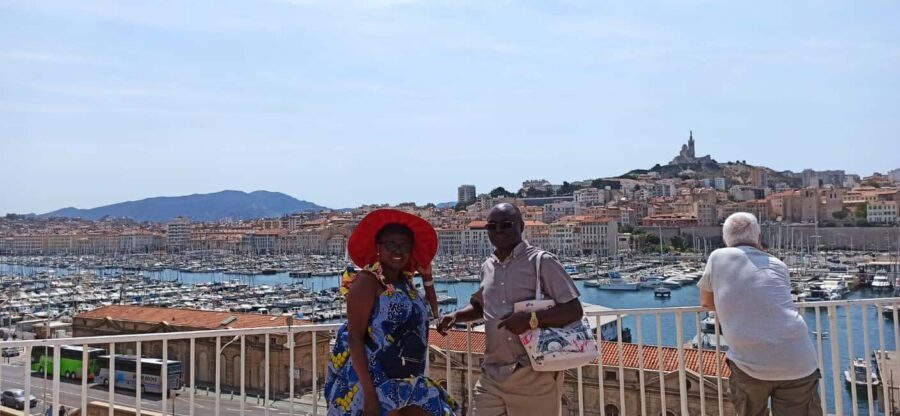
A useful cue from experiences shared by visitors is that people often combine Mucem with the area connected by the surrounding fort zone and then continue toward Le Panier. It’s also a good day for skyline views: some people specifically look out toward the Cathédrale de la Major and Notre-Dame de la Garde.
I’ll frame this as a planning tip: treat the museum as your cultural anchor, then give yourself time for the neighborhood stroll. The views aren’t an afterthought here. They’re part of why the site works.
What to expect from your pace and priorities
You’re buying time savings, but you still need to decide how you want to spend the inside hours.
If you’re a “one big exhibition” person: focus on the Mediterranean storytelling and spend quality time in the main exhibition spaces. In that case, you’ll likely feel satisfied without cramming.
If you’re a “learn and wander” person: use the audio guide for context, then follow your curiosity to other sections. The museum’s mix of history and contemporary art can change your mood mid-visit in a good way.
If you’re with kids or teens: the ticket is best for ages who enjoy museums that mix objects with stories. Also note that entry to the museum is free for those under 18 with valid ID.
If you’re on a strict schedule: arrive before 1:00 PM, get your audio guide ready, and pick the exhibition that interests you most. You can’t see everything everywhere, and you shouldn’t try.
Who this ticket is best for (and who might pass)
This skip-the-line Mucem ticket is a strong fit if you want:
- A museum where the theme is place-based (the Mediterranean) and not generic
- Architecture that doubles as a viewpoint system
- Exhibitions that connect history, anthropology, art, and culture
- A one-day plan that you can pair with Marseille walking time
It’s also great if you hate waiting in lines. The museum experience rewards getting inside early.
Who might think twice? If you already know you dislike museums with heavy thematic storytelling, you might find it too academic. And if your ideal museum includes lots of room for spontaneous lounging, note that galleries are still galleries—you’ll have to move through exhibition areas like most museums.
Café reality check: quick food may not be your thing
One possible downside shows up in practical terms: the museum’s cafe food doesn’t land the same way for everyone. Some people prefer simple snacks like a straightforward sandwich, while cafe offerings can feel more elaborate or ingredient-driven.
So if you’re picky about food, plan a backup. Either eat before you go or bring something simple you’ll enjoy, then treat museum cafe time as optional rather than essential.
Should you book this skip-the-line Mucem ticket?
If you’re visiting Marseille and you want a museum stop that feels modern, thoughtful, and tied to the sea, I’d book it. The value comes from the combination of skip-the-line entry, a major building by Rudy Ricciotti, and exhibitions focused on the Mediterranean’s cultural connections.
Book it especially if you’re going on a day you think will be busy. Arriving before 1:00 PM and getting in fast lets you enjoy the building and the exhibitions without the time drain.
Skip it only if you’re museum-averse, you’re not interested in Mediterranean culture, or you’re traveling so late in the week that a Tuesday closure could ruin your plan.
Either way, give yourself walking time afterward. Mucem works best when you treat it as a start point, not a finish line.
FAQ
How long is this ticket valid?
The ticket is valid for 1 day. You’ll also see starting times available when you check availability.
Does this entry ticket help me avoid lines?
Yes. This is a skip-the-line entry ticket to the Museum of European and Mediterranean Civilizations (Mucem).
Where do I meet for the ticket?
The meeting point is Mucem, 7 Promenade Robert Laffont, 13002 Marseille.
What time should I aim to arrive for the best experience?
For the best visiting conditions, you should aim to arrive before 1:00 PM.
What languages is the audio guide available in?
The audio guide is available in English and French. It also offers additional languages for outdoor exhibitions: Spanish, Italian, and German. Indoor audio guide coverage is listed as French and English.
Is the museum closed on any day?
Yes. The museum is closed every Tuesday.