REVIEW · MARSEILLE
Marseille: City Sightseeing Hop-On Hop-Off Bus Tour
Book on GetYourGuide →Operated by Colorbüs Marseille · Bookable on GetYourGuide
Marseille hills look made for a hop-on ride. This panoramic bus tour is a practical way to sample the city’s top sights at your pace, with phone audio and real-time tracking through the Colorbüs app.
I especially like the mix of viewpoints and structure: you get sweeping city photos from the top deck, then you can jump off for the specific stops that matter most to you, like Notre-Dame de la Garde and the coast area around Mucem. I also like how the route is built around Marseille’s recognizable “anchors,” from the Old Port area to the sea-front stretches like Corniche Kennedy.
One drawback to plan around: this is an app-and-phone experience. If your connection is weak, the audio can get choppy, and you’ll still need to bring headphones.
In This Review
- Quick Takeaways Before You Ride
- The Value: Why This HOHO Works in Marseille
- Starting Point at Old Port: The Part That Can Make or Break Your First Hour
- How the Colorbüs App Changes the Experience (and the Risks)
- What I Like About This App Setup
- From Old Port to La Major: Start Easy, Build Momentum
- Mucem and the Coast: Where Marseille Looks Like a Postcard
- Vallon des Auffes: The Stop That Feels More Local
- Corniche Kennedy: Ride for Views, Get Off for Sea Air
- Notre-Dame de la Garde: The Best Reason to Leave the Bus
- Seat Strategy for Best Photos
- Staying Flexible: How to Plan Your Day Without Overthinking It
- Drivers, Staff, and the Human Touch in a Phone-First Tour
- Practical Comfort Rules: Headphones, No Food, and Narrow Streets
- Who This Tour Fits Best (and Who Might Want Something Else)
- Should You Book This Marseille Hop-On Hop-Off Bus?
- FAQ
- Does the tour stop at the Marseille cruise port?
- Where is the meeting point?
- Is the audio guide included, and how do I listen?
- Do I need to bring headphones?
- Can I hop on and off during the day?
- What time do buses run?
- Is Wi‑Fi available on the bus?
Quick Takeaways Before You Ride
- Old Port start (86 Quai du Port): easy to orient from the Town Hall area.
- Hop on and off all day: you can pace your own photo stops and walks.
- Colorbüs app audio in 11 languages: plus bus location tracking so you’re not guessing.
- Most of the value is time-saving: you’re not bouncing between hills, narrow streets, and long walking gaps.
- Top-deck views are the point: especially for Marseille’s curved coast and hilltop lookouts.
- Bring headphones, always: and don’t count on shared earbuds or seat jacks to save you.
The Value: Why This HOHO Works in Marseille
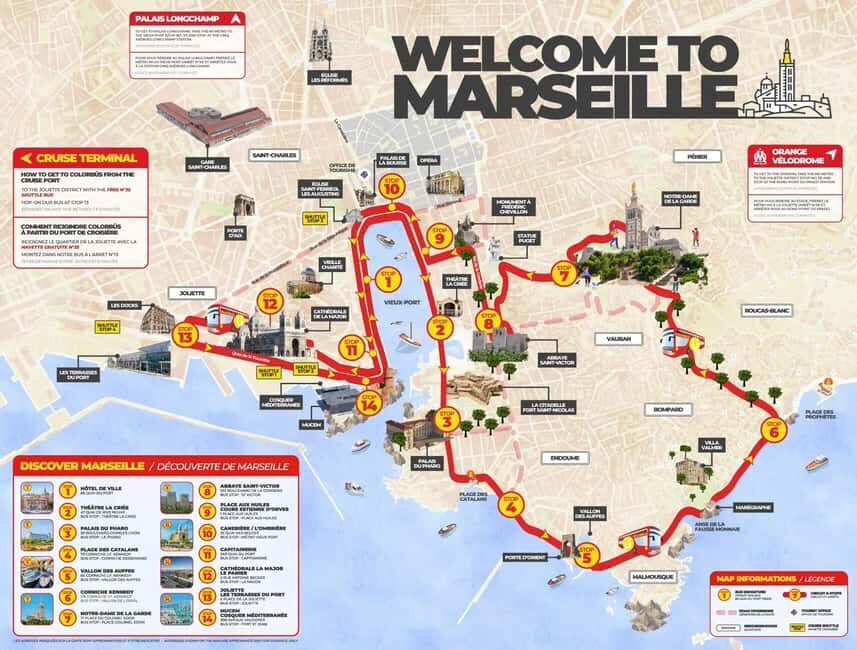
Marseille can feel like two different cities: the waterfront and the steep neighborhoods above it. A hop-on hop-off bus helps you switch between those moods without turning your day into a steep-walk contest.
At about $27 per person for a 1-day ticket, you’re buying convenience more than “museum time.” You’re basically paying to:
- move fast between distant sights,
- take breaks when you want (not when a group schedule says so),
- and get audio context while you’re rolling past neighborhoods and viewpoints.
If you’re in town for a short stop, or you’re pairing this with a few targeted walks (Old Port one moment, hilltop basilica another), it’s a solid way to get an overview without paying taxi prices for every transfer. It’s also a good solo strategy: you can stop for photos, then catch the next bus when you’re ready.
If you're still narrowing it down, here are other tours in Marseille we've reviewed.



Starting Point at Old Port: The Part That Can Make or Break Your First Hour
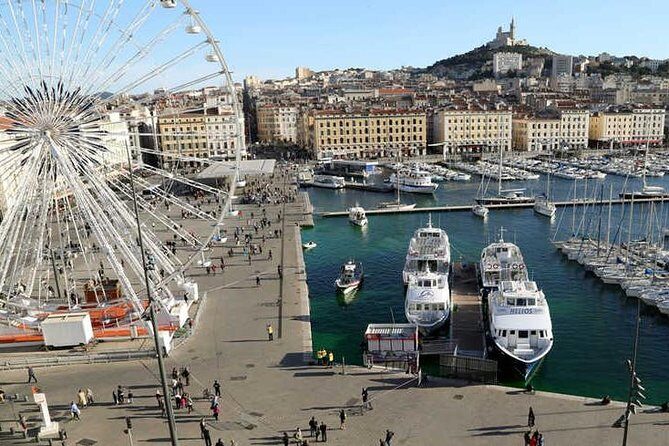
The tour starts in the Old Port area at 86 Quai du Port (13002), about 150 meters from the Town Hall. That’s genuinely helpful because it’s a landmark you can find even when the streets start to twist.
Two planning notes matter:
- No stop at the cruise port. If you’re arriving by ship, you’ll need your own connection to the Old Port meeting area.
- Get ready for variable bus-filling at stops. Especially in summer or on weekends, some buses can arrive already full. The best fix is simple: start at the main departure point or go during off-peak hours (early or late).
If you’re coming from a cruise, you’ve got options listed for reaching the center:
- ask your cruise line about a shuttle to Marseille’s center,
- take the 35T bus from the Cruise Terminal to Place de la Joliette,
- or take a taxi directly to the Old Port meeting point.
How the Colorbüs App Changes the Experience (and the Risks)
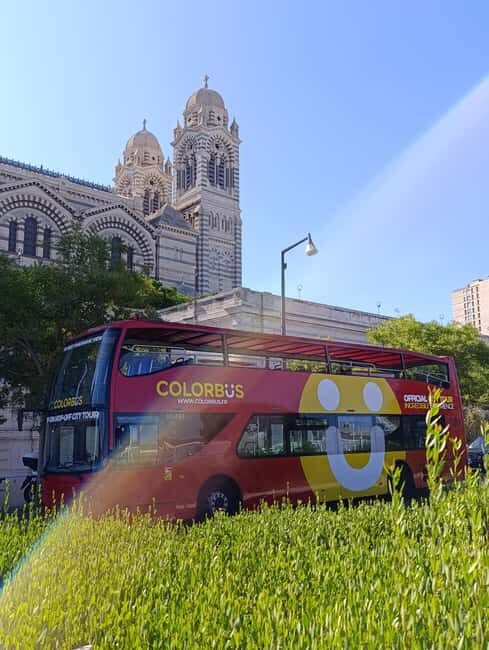
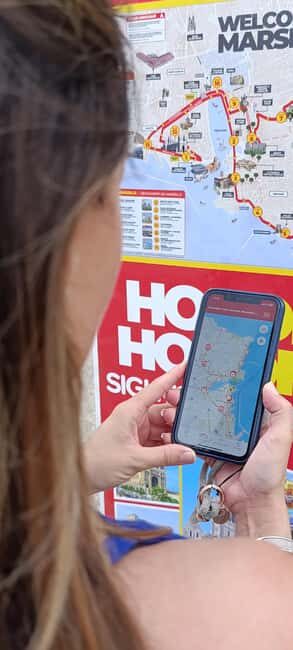
This tour’s “guide” is your phone using the Colorbüs app, with audio available in 11 languages. It also gives you real-time bus tracking, plus free Wi‑Fi on board.
That’s great in theory, and it can be great in practice—if you manage your phone setup smartly:
- Bring your own headphones. The tour does not provide them.
- Expect signal hiccups at times. Some riders report the audio cutting in and out when the connection is weak.
- If you can, plan to access audio reliably (for example, by preparing before you board and keeping your phone in a mode that doesn’t aggressively limit audio).
One more thing I’d treat as a caution, not a complaint: some people found that seat audio jacks didn’t work as expected. So even if you see hardware on the bus, keep your phone + headphones as your main plan.
What I Like About This App Setup
The tracking can turn a chaotic city into something calmer. Instead of standing there wondering when the next bus comes, you can check where it is. And when audio works smoothly, it helps you make sense of what you’re seeing—maritime Marseille, religion on hilltops, and architecture clustered along the coast.
From Old Port to La Major: Start Easy, Build Momentum
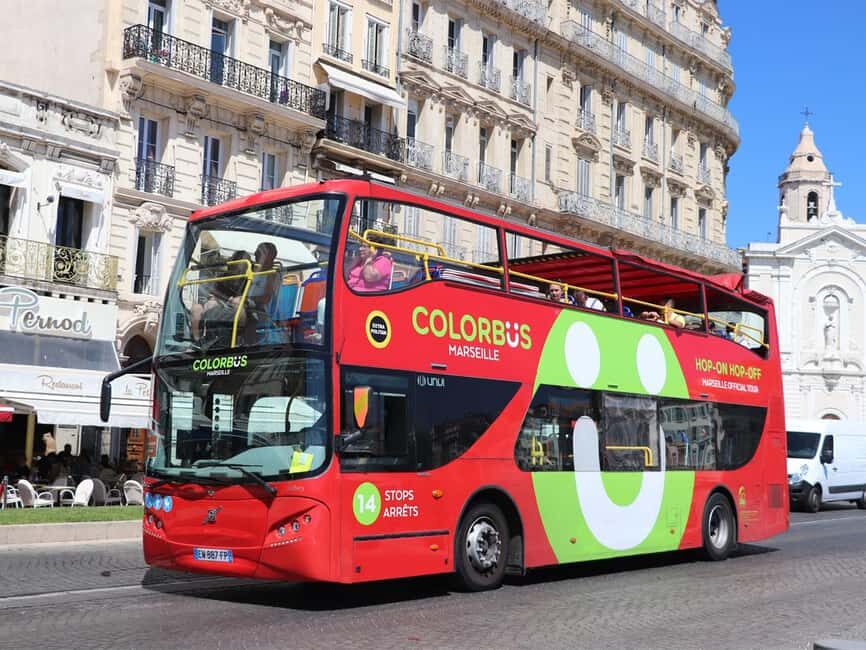
Your first big impression is the Old Port area, right where so many day-to-day Marseille moments happen. This matters because the tour’s route is designed to help you orient quickly: you get your bearings fast, then you can choose which stops you want to treat like “major chapters” instead of quick photo stops.
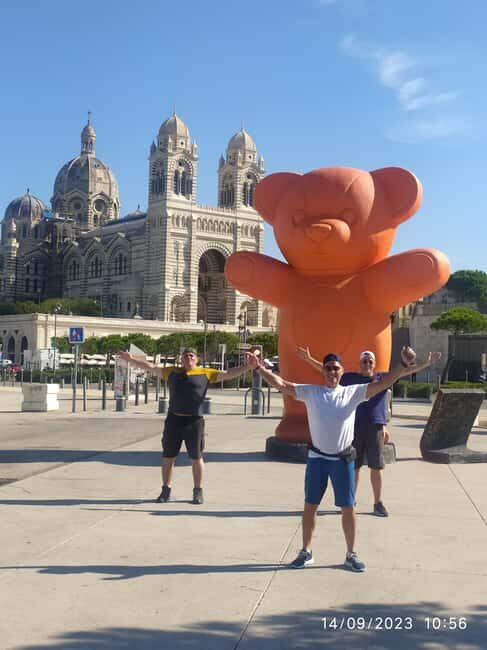
After the waterfront introduction, you’re headed toward La Major Cathedral. Even if you don’t go inside, it’s a strong visual anchor, and it helps you understand why Marseille’s religious and maritime identities show up everywhere.
Tip: If you’re the type who gets overwhelmed by lots of stops, use the first loop like a scouting pass. Ride it once, note what you care about, then hop off on your second pass.
Other city tours we've reviewed in Marseille





Mucem and the Coast: Where Marseille Looks Like a Postcard
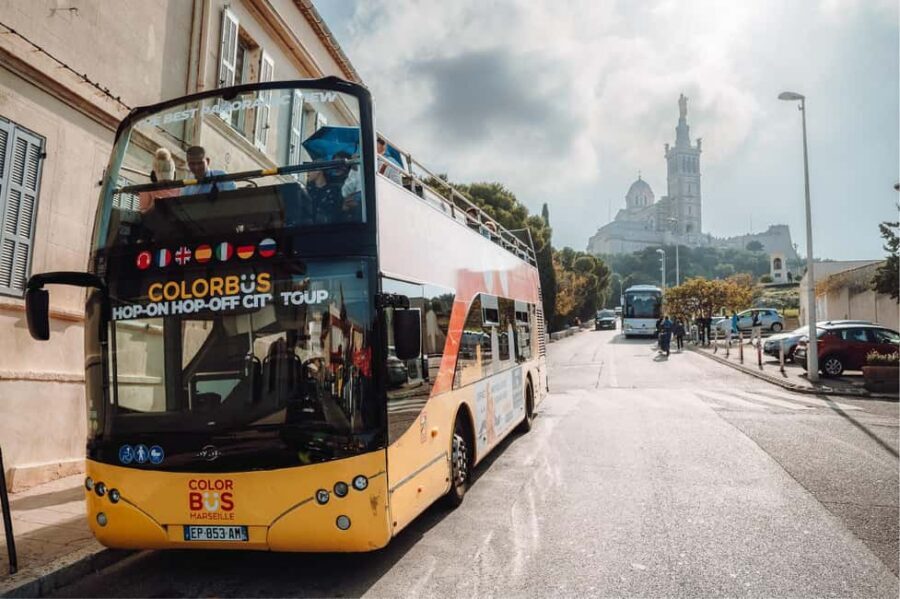
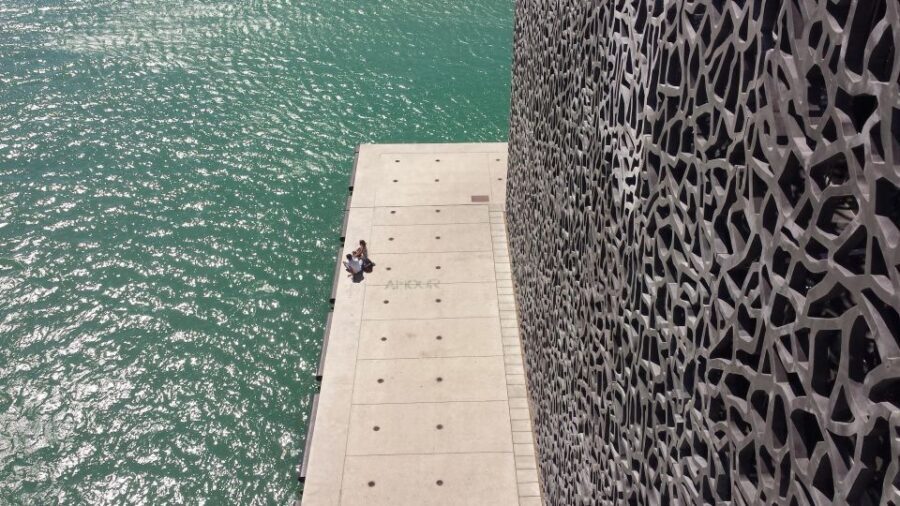
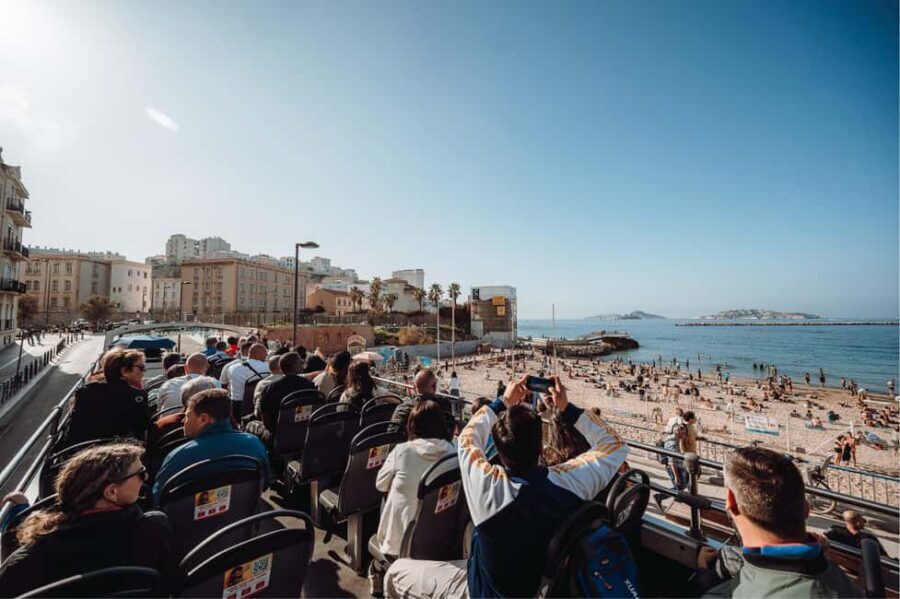
This is where the tour starts earning its “panoramic” label. The bus route includes Mucem and the surrounding waterfront complex, plus the Cosquer Méditerranée area as a point of interest.
What’s useful here isn’t just the building—it’s the geometry of the place. Marseille’s coast bends around coves and rises toward hill viewpoints. Riding past this in an open-top bus is one of the fastest ways to understand the city’s “why” without staring at maps for hours.
Vallon des Auffes: The Stop That Feels More Local
The route also calls out Vallon des Auffes, a bay/harbor corner that tends to feel more lived-in than the big highlight landmarks. If you want at least one stop where you can slow down and just enjoy the scene, this is the kind of area where that works well.
There’s a practical payoff too: HOHO gives you permission to get off, walk a bit, take your time, and then return to the bus when you’re done—no rushing to “make the next guided group.”
Corniche Kennedy: Ride for Views, Get Off for Sea Air
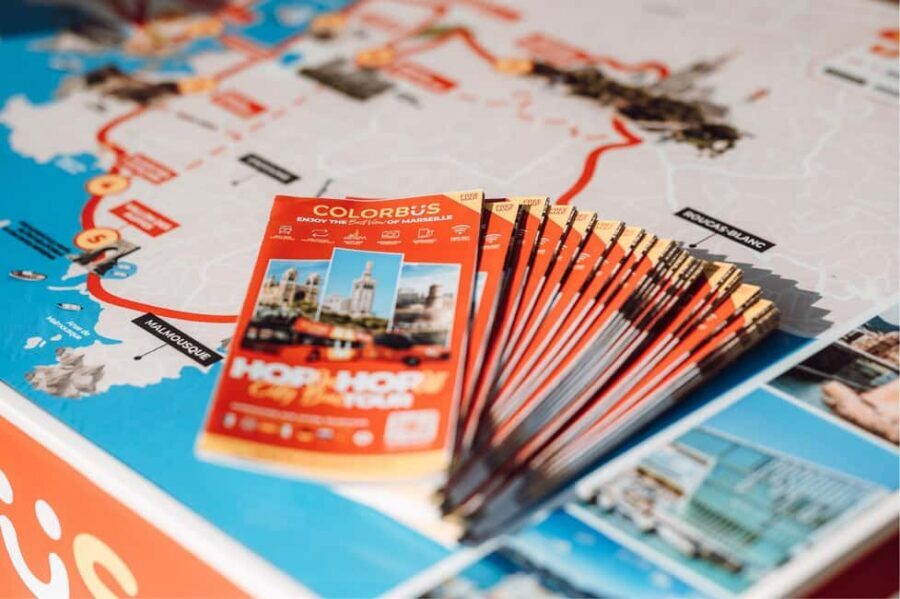
The tour’s advice is clear: take a stroll along the sea on Corniche Kennedy. This is the kind of stretch where getting off can be worth more than the next bus stop.
If you want photos without spending your whole day climbing, this is a smart compromise. The bus gives you a moving viewpoint, and the waterfront walkway gives you an easy place to pause.
If your phone audio is working well, you’ll also likely pick up useful context about why this coast matters to Marseille’s identity—maritime trade, culture, and the way the city builds around its harbor.
Notre-Dame de la Garde: The Best Reason to Leave the Bus
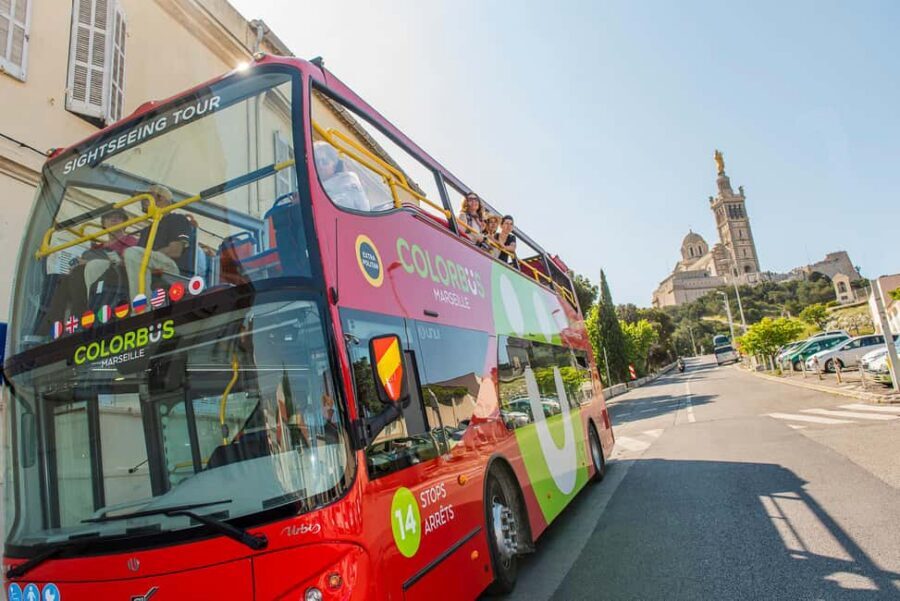
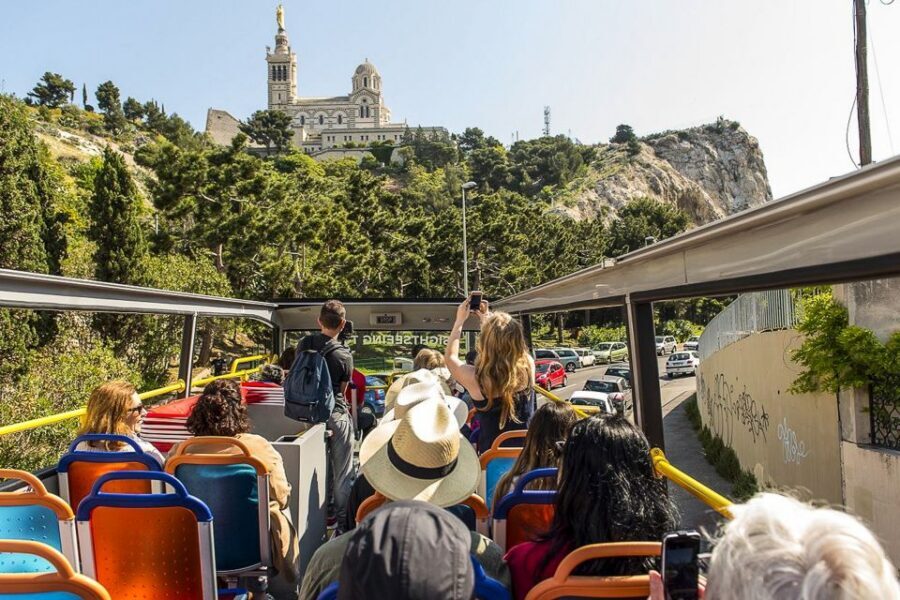
If there’s one stop on the route that people tend to treat like a “real visit,” it’s Notre-Dame de la Garde (the basilica). The tour description pushes it hard for a reason: it’s a hilltop viewpoint, and it’s made for big, satisfying views over the whole city.
Here’s what makes this stop valuable even if you only have a limited time window:
- You get a clear sense of Marseille’s layout—coastline, harbor area, and the steep neighborhoods above.
- You can combine sightseeing with a calm pause. This isn’t a quick “look and move” stop if you want the views to land.
Seat Strategy for Best Photos
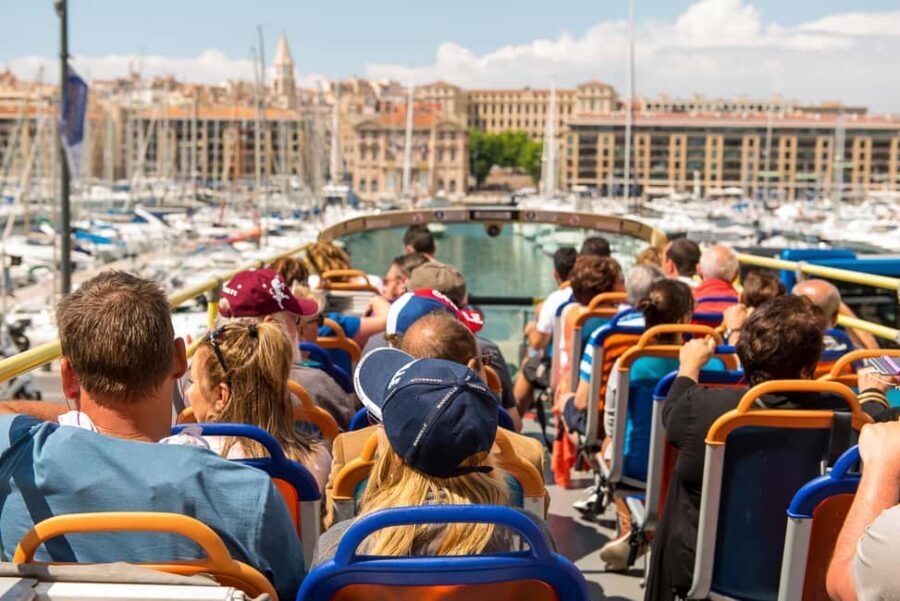
One detail from rider feedback that I’d actually use: sit on the top right side of the bus for good views. It’s not a guarantee, but it can improve your odds when you’re aiming for photos.
Staying Flexible: How to Plan Your Day Without Overthinking It
The tour is designed for a “first impression, then focus” day. A good pacing strategy is:
- First pass: stay on the bus long enough to understand the route.
- Second pass: hop off at only 2–4 priorities so you don’t burn time walking back to buses.
That approach is also kinder if you’re tired or traveling with someone who doesn’t want to do constant steep transitions on foot. HOHO helps you keep your energy for the stops you really care about.
Just keep in mind a real-world constraint: the buses can move through busy areas, and if crowds stack at a stop, you might wait longer for the next one than the “on paper” schedule suggests.
Drivers, Staff, and the Human Touch in a Phone-First Tour
Even with phone audio, the tour still runs on people. In rider feedback, staff names show up in the best way—like Rahim, Enzo, Jat, Roman, and a guide named Lumi. The common thread: they’re helpful, especially when the day gets hectic.
This matters because your experience depends on the first steps working smoothly, from exchanging your voucher to finding the right spot to board. If you get stuck at the beginning (or your mapping app sends you on a long walk), don’t struggle silently—ask.
One specific frustration that can happen: the ticket exchange location can be confusing if Google Maps points you somewhere off. If you’re relying on your phone, double-check the meeting point details before you head over, and don’t be afraid to use a landmark-based direction like Town Hall / Old Port.
Practical Comfort Rules: Headphones, No Food, and Narrow Streets
A few straightforward rules make a big difference for comfort:
- Headphones are required. Don’t assume you’ll find replacements.
- No smoking on the vehicle.
- No food or drinks on the vehicle.
Also, Marseille streets can be tight and bendy. Some drivers are praised for maneuvering the bus around corners. So if you’re prone to motion sickness, consider bringing something for that and sit where you feel most steady.
Who This Tour Fits Best (and Who Might Want Something Else)
This works best if you:
- want an overview of Marseille without committing to a full-day walking plan,
- like audio context while you ride,
- and you’re happy making your own mini-itinerary (hop off, explore, return).
It’s a bit less ideal if you:
- don’t want to rely on a phone for audio,
- hate dealing with app connections,
- or you don’t have headphones and don’t plan to get any.
If your group is the type where people dislike technology in the middle of travel, you may find it stressful to coordinate audio on multiple devices.
Should You Book This Marseille Hop-On Hop-Off Bus?
I’d book this if your goal is simple: get a strong Marseille first impression, then zoom in on the places you care about most. The Old Port start, the hop-on flexibility, and the fact that it’s built around major landmarks (Mucem, Corniche Kennedy, Notre-Dame de la Garde, La Major) make it a practical value play.
I’d think twice if your phone connection is unreliable or if you’re unwilling to use the app. The tour’s biggest weakness is also its core feature: the guide is on your phone. Pack smart (especially headphones) and plan for the possibility that audio may glitch.
If you do that, you’ll likely end up with exactly what HOHO is supposed to give you in Marseille: fast orientation, big views, and the freedom to spend your energy where it counts.
FAQ
Does the tour stop at the Marseille cruise port?
No. The tour does not stop at the cruise port in Marseille, so you’ll need to make your own way to the Old Port meeting point.
Where is the meeting point?
The starting point is at the Old Port, 86 Quai du Port (13002), about 150 meters from the Town Hall. You exchange your GetYourGuide voucher at that departure point.
Is the audio guide included, and how do I listen?
Yes. The audio guide is included and you listen on your phone through the Colorbüs app (with audio available in 11 languages).
Do I need to bring headphones?
Yes. Earphones/headphones are not included, and you’ll need your own to listen comfortably.
Can I hop on and off during the day?
Yes. You can hop on and off at any stop along the route during the validity of your 1-day ticket.
What time do buses run?
Buses run daily from 10 a.m., though schedules can vary depending on the season.
Is Wi‑Fi available on the bus?
Yes. There is free Wi‑Fi on board.