REVIEW · MARSEILLE
Guided Tour in Marseille: Vieux Port & Old City
Book on Viator →Bookable on Viator
Marseille feels like it is made for walking.
This 3-hour guided route strings together the city’s Vieux Port, the twisting streets of Le Panier, and then climbs to Fort Saint-Jean for sea-and-port views. It’s a great way to get your bearings fast without doing the hard thinking yourself.
I especially like how the guide (often Sarit) turns places into stories you can picture later, and how the pace works for a small group while still hitting major sights. The main catch: it involves stairs and hills, so plan for real climbing.
In This Review
- Quick Take: Vieux Port to Fort Saint-Jean in One Smart Loop
- Key Highlights Worth Planning Around
- Getting Oriented at L’Ombrière de Norman Foster
- Walking the Vieux Port Core Like a Local Morning
- Le Panier: Streets, Plazas, and the Stuff You Actually Want to Stop For
- Centre de la Vieille Charité: A 17th-Century Stop That Helps the Big Picture
- Cathedrale de la Major: Step Inside the Structure
- MUCEM Terrace to Fort Saint-Jean: Views That Make the Stairs Worth It
- Price and Timing: Does $60.46 Make Sense?
- What the Guide Style Really Means for Your Experience
- How Hard Is This Walk? Stairs, Hills, and Smart Planning
- Who Should Book This Marseille Old City Tour?
- Should You Book This Vieux Port & Old City Tour?
- FAQ
- How long is the Marseille Vieux Port & Old City guided tour?
- What’s the meeting point and where does the tour end?
- Is the tour in English?
- What kind of ticket do I need?
- Are admissions included for the stops?
- Is transportation included, like a bus or private transfer?
- Is this a walking tour with hills and stairs?
- What happens if weather is poor?
- What’s the cancellation policy?
Quick Take: Vieux Port to Fort Saint-Jean in One Smart Loop

You start near public transit at L’Ombrière de Norman Foster on Quai de la Fraternité, then end back there. You’ll use a mobile ticket, go with an English-speaking guide, and spend about 3 hours moving between stops with free access at each point on the plan.
This is best for people who want an organized overview and don’t mind uneven terrain. If you’re expecting a bus tour with minimal walking, this is not that.
Key Highlights Worth Planning Around
- Small-group feel (max 20): enough space to hear the guide and keep the stroll moving.
- Free entry built into the route: major stops are scheduled without extra ticket costs.
- Le Panier time for street-level Marseille: plazas, house fronts, shops, and street art at walking pace.
- Old-city hearing reality: no headset setup is used in quieter streets, so you’ll want to stand where you can hear.
- The fort payoff is the views: Fort Saint-Jean is all about the 360-degree sea-and-port panorama.
- Local details beyond monuments: you may get practical shop and snack tips, plus follow-up ideas for what to do next.
Other Old Port and Vieux Port tours in Marseille



Getting Oriented at L’Ombrière de Norman Foster

Your tour kicks off at L’Ombrière de Norman Foster on Quai de la Fraternité (13001 Marseille). That matters because it’s a central, easy-to-find anchor point near public transportation, which keeps your morning from turning into a treasure hunt.
From there, the tour’s whole purpose is orientation. Marseille’s old streets can feel like a maze if you don’t know what you’re looking at, but you’re not left alone to guess. The guide helps you connect landmarks to street directions, so the city starts making sense while you’re still at street level.
Walking the Vieux Port Core Like a Local Morning
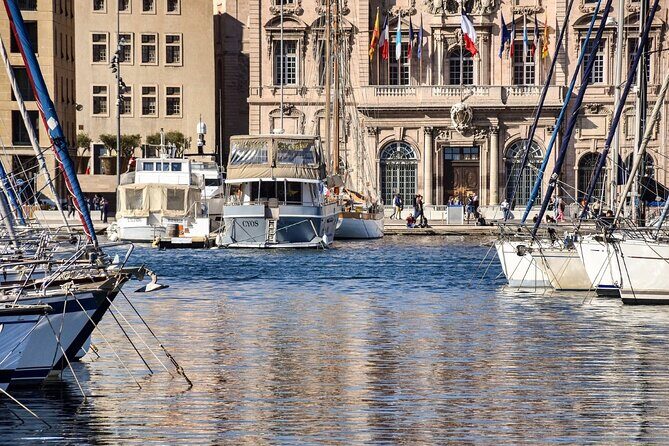
The first stop is Le Vieux Port, about 30 minutes. You’ll walk the port area and pick up the “why this place matters” context for Marseille—what the port has meant for trade, movement, and city identity over time.
This is also where you’ll get a quick mental map. Ports are big, but the details make them clickable: viewpoints, where streets funnel down, and how the water lines up with higher neighborhoods. Even if you’ve seen photos, seeing it at walking speed helps.
A small practical note: the route is walking-forward. There’s no private transportation included, so you’ll want comfortable shoes and a bottle of water (especially if the weather is warm).
Le Panier: Streets, Plazas, and the Stuff You Actually Want to Stop For
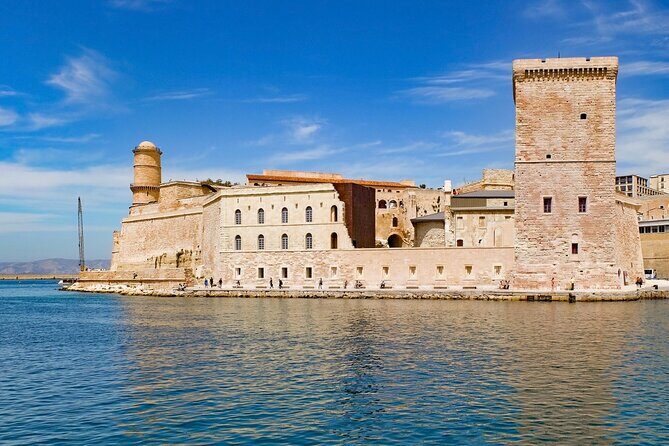
Le Panier is next, with about 40 minutes. This is the historic neighborhood that’s all about atmosphere—plazas, old houses, small shops, and street art you can’t appreciate from a distance.
The guide’s approach tends to be practical and human. You’re not just being pointed at a mural; you’re learning how the neighborhood developed and how people use the streets now. If your group slows down for a drink, that’s part of the rhythm here.
One reason this stop gets strong reactions is the kind of detours the guide can suggest. For example, Sarit has been described as introducing visitors to local products like donkey milk soap and lotion, plus even hot wine—small, very Marseille-style additions that make the neighborhood feel personal rather than like a checklist.
If you’re the type who likes to browse, this is where you’ll feel it the most. If you’re strictly on a tight schedule, just remember: Le Panier rewards lingering.
Centre de la Vieille Charité: A 17th-Century Stop That Helps the Big Picture

After Le Panier, you’ll head to Centre de la Vieille Charité for around 15 minutes. The focus here is the old asylum from the 17th century—one of those buildings that looks like it has layers, even before the guide adds the story.
This short stop is valuable because it changes your perspective. The day isn’t only about scenery; it also helps you understand how Marseille organized institutions and communities in earlier centuries. You’ll get a better read on why certain buildings sit where they do and how that shapes the feel of the streets around them.
The drawback is time. Fifteen minutes is not a museum marathon. Think of it as a meaningful snapshot that makes the rest of the walk land better.
Other guided tours in Marseille





Cathedrale de la Major: Step Inside the Structure
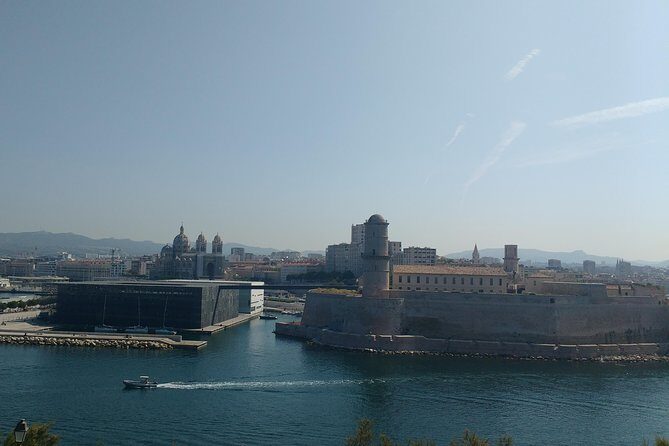
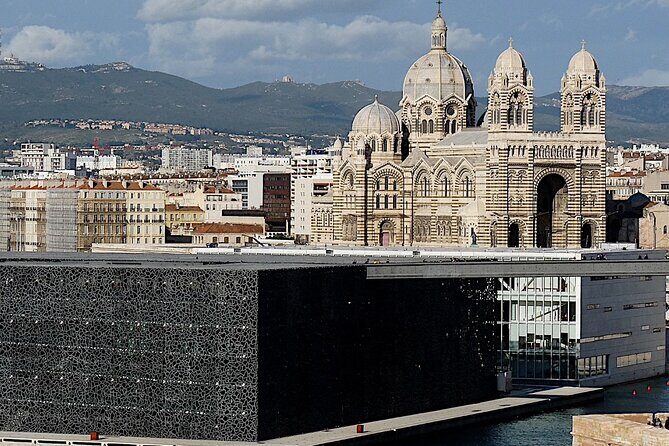
Next is Cathedrale de la Major, about 25 minutes, including entering the cathedral. This is one of the places on the route where you’ll likely feel a shift from outdoor street-level walking into something more architectural and grand.
Entering the cathedral is a good use of your tour time because the guide can point out structure and design cues that are easy to miss on your own. It’s also a useful break from the open walking areas—shade, cool air, and a slower pace.
Keep expectations realistic: this isn’t a private viewing where you control every minute. It’s more like: arrive, understand what you’re seeing, and get oriented so you can enjoy it without feeling rushed.
MUCEM Terrace to Fort Saint-Jean: Views That Make the Stairs Worth It
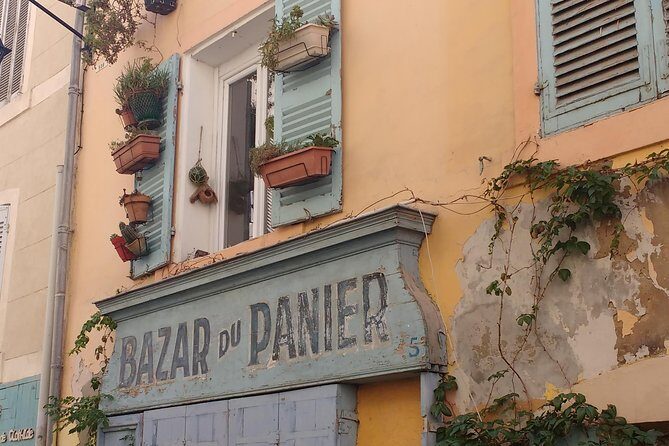
MUCEM comes next, but it’s scheduled as a pass-through (around 15 minutes). You’ll move through the area on the way toward the fort, with time to admire the terrace and architecture.
This works well because it gives you a modern contrast without stealing the whole tour. Marseille isn’t one era, one style, or one neighborhood. MUCEM is part of that mix, and even a short look can help you understand how the city balances old streets with newer cultural spaces.
Then comes the highlight climb: Fort Saint-Jean (about 25 minutes). You’ll walk around the fort and, most importantly, enjoy the 360-degree views of the sea and port. This is the kind of payoff that makes the morning feel like more than just “a lot of walking.”
Practical reality check: Fort Saint-Jean is worth it, but you’re not arriving on a flat path. Marseille is hilly, and there are stairs and inclines built into the city’s layout. If you’re traveling with knee issues or limited mobility, this is the part where you’ll feel it most.
Price and Timing: Does $60.46 Make Sense?
At $60.46 per person for about 3 hours, you’re paying for three things:
1) a guide to connect the dots,
2) a small-group route that keeps you moving,
3) free-access stops that remove decision fatigue.
The “free entry” detail matters. You’re not stacking extra ticket costs on top of the base price, and the itinerary is structured so you hit the most important areas without hopping around the city by yourself.
If you only have a half-day and you want a coherent overview, the cost can feel reasonable fast. If you already know you’ll spend your time only in one neighborhood and you love wandering with no plan, you might not need a guide.
What the Guide Style Really Means for Your Experience
This tour lives or dies by pacing and communication. The guide experience here is consistently described as friendly, patient, and focused on storytelling—Sarit is the name that shows up again and again. That style tends to do two things for you: it keeps the walking interesting, and it helps you understand what you’re seeing without overload.
There’s also the hearing factor. Some visitors have noted that there are no headsets, and that can make the tour tougher when the group is in narrow streets. The guide also keeps a microphone off in interior old-city areas to avoid disturbing local residents. So you’ll do best if you stay close enough to hear and don’t hang back.
If you’re the kind of person who dislikes crowds but wants conversation, this small-group size (max 20) is a sweet spot. People can ask questions. You can hear answers. You can adjust your walking pace a bit without derailing the whole plan.
How Hard Is This Walk? Stairs, Hills, and Smart Planning
The tour calls for moderate physical fitness, and the terrain matches that. You should expect stairs and slopes. Even if the pace is manageable, Marseille is not flat, and there’s at least one unavoidable stair section in the old city.
What I’d tell you to do:
- wear shoes with real grip
- bring water
- pack light if you can
- if you use a walking stick or mobility aid, plan for the fact that some parts will require extra care
One more detail from real-world experience: this kind of walking tour can be done with strollers, but it’s not stroller-glide easy. Lifting or maneuvering may be necessary, and the guide may not pause long for frequent regrouping. If you’re pushing a stroller, be ready for more effort and fewer options for shortcuts.
And if you’re traveling during windy or changeable weather, build in flexibility. Marseille conditions can shift fast, and the tour is outdoors much of the time.
Who Should Book This Marseille Old City Tour?
This is a strong fit if you:
- want a structured overview in about 3 hours
- enjoy history told in plain, story-driven ways
- like mixing old streets with a major view from a fort
- prefer a guided plan that still leaves room to stop for a drink
It’s less ideal if you:
- want minimal walking or no stairs
- plan to keep your schedule rigid down to the minute
- struggle with hills and inclines, especially near the fort
If you’re traveling with teens or a mixed-age group, the day can work well because it offers variety: port area first, then neighborhood streets, then cathedral, then fort views. There’s something to hold interest at each step.
Should You Book This Vieux Port & Old City Tour?
Yes, if you want to understand Marseille quickly and you’ll enjoy walking the old streets at an organized pace. It’s also a smart booking choice if you’re short on time, because it strings together the big landmarks without making you plan transportation between neighborhoods.
No, if your plan depends on resting every few minutes or if stairs and hills are a deal-breaker. In that case, you’ll likely spend more energy managing the terrain than soaking up the sights.
If you do book, do one simple thing: show up ready to walk and to listen. Stand where you can hear your guide, and you’ll get far more out of the cathedral stop and the fort views than you would wandering alone.
FAQ
How long is the Marseille Vieux Port & Old City guided tour?
It runs for about 3 hours.
What’s the meeting point and where does the tour end?
The tour starts at L’Ombrière de Norman Foster, Quai de la Fraternité, 13001 Marseille, France, and it ends back at the same meeting point.
Is the tour in English?
Yes, it’s offered in English.
What kind of ticket do I need?
You’ll use a mobile ticket.
Are admissions included for the stops?
Yes, the stops listed on the tour plan show admission ticket free.
Is transportation included, like a bus or private transfer?
No. The tour does not include private transportation.
Is this a walking tour with hills and stairs?
Yes. It’s described as requiring moderate physical fitness, and the route includes stairs and inclines.
What happens if weather is poor?
The tour requires good weather. If it’s canceled due to poor weather, you’ll be offered a different date or a full refund.
What’s the cancellation policy?
You can cancel up to 24 hours in advance for a full refund. If you cancel less than 24 hours before the start time, the amount paid is not refunded.