REVIEW · MARSEILLE
Marseille: Half-Day City Highlights Guided Walking Tour
Book on GetYourGuide →Operated by Marseille Tour · Bookable on GetYourGuide
Marseille is a city you have to walk to understand. This half-day guided route turns 2600 years of history into a real, street-level experience, with Charles leading you through neighborhoods cars can’t reach. I especially like the way he ties together landmarks, everyday life, and local stories instead of rattling facts. The main catch: this is a serious walking tour (about 9 kilometers with hills and steps), so you’ll want solid shoes and decent stamina.
You’ll start at La Major Cathedral and move from the water up to the viewpoints, then back down through working districts and photogenic corners. The group stays small (up to 8), and the guide is bilingual (English/French), which makes questions feel normal instead of rushed. One more consideration: there’s no food stop built in, so you’ll need to pack your own water and snacks to keep energy up.
What makes this tour feel worth the money is the pacing and personality. Charles brings high energy, answers questions on the spot, and keeps the walk moving without turning it into a power march. If you want a quick sampler of Marseille that still feels personal, this one lands well.
In This Review
- Key highlights you’ll feel from the first blocks
- Starting at La Major: the walk begins where Marseille shows off
- A 4-hour Marseille route that adds up to about 9 kilometers
- Le Panier and Hôtel de Ville: the city’s personality in walking distance
- Old Port, a short ferry ride, and the waterfront rhythm
- Puget Hill and Notre-Dame de la Garde: the climb for the view
- Vallon des Auffes, Corniche Kennedy, and Plage des Catalans
- Palais du Pharo and Saint Victor: finishing with a sense of place
- Why Charles’s style makes this tour feel efficient
- Price, effort, and who this tour is actually for
- Should you book this Marseille walking tour?
- FAQ
- How long is the Marseille half-day city highlights walking tour?
- Where is the meeting point?
- How big is the group?
- What languages are offered?
- Is food or drink included?
- Which main sights are included?
- How much walking is involved?
- What should I bring?
- Is this tour wheelchair accessible?
- Can I cancel for a full refund?
Key highlights you’ll feel from the first blocks
- Small group (max 8), so you actually get time to ask questions
- Charles’s storytelling connects neighborhoods to Marseille’s past and present
- Notre-Dame de la Garde viewpoint time, plus a built-in rest break
- Old Port plus a short ferry ride for a quick change of scenery
- Le Panier and side streets that you’d be unlikely to find on your own
- Coastal viewpoints and coves from the Corniche area down to Vallon des Auffes
Starting at La Major: the walk begins where Marseille shows off
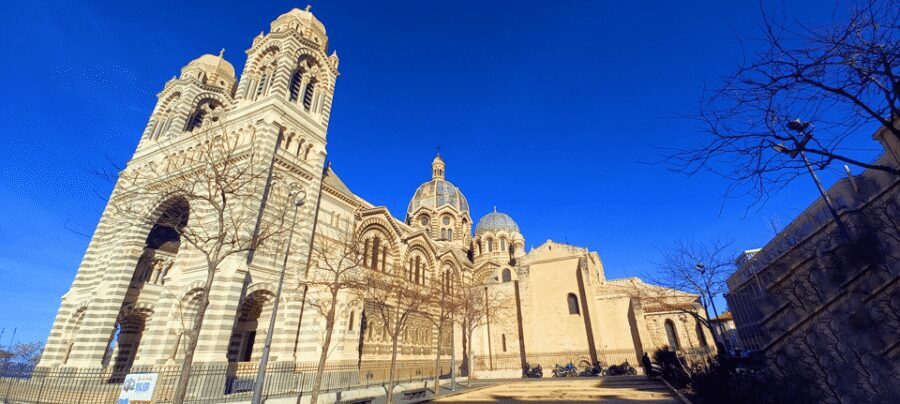
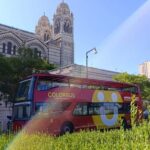
Meet right in front of Cathédrale Basilique Sainte-Marie-Majeure (La Major). Your guide, Charles, wears a white cap, which makes it easy to find the group. This matters more than you’d think: getting off on the right foot (literally) keeps the first hour calm, not chaotic.
From La Major, the tour quickly orients you to the city’s shape. You’re not just ticking off famous spots. You’re learning how Marseille works—ports below, neighborhoods in the middle, and viewpoints up top. That big “map in your head” effect is one reason walking tours are so useful here.
Also pay attention to the footwear you bring. The tour is designed for pedestrian streets and includes stairs/hills. If you show up in shoes that are fine for flat sidewalks only, you’ll feel it by the time you start climbing.
Other walking tours we've reviewed in Marseille

A 4-hour Marseille route that adds up to about 9 kilometers
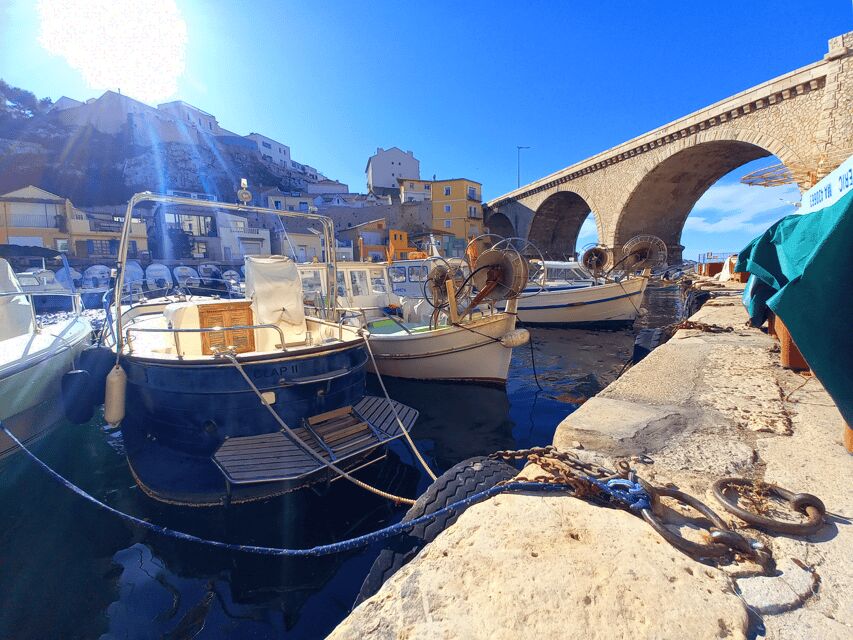
Plan on 4 hours of moving time and a route totaling about 9 kilometers. That’s a lot for a half-day, but it’s also why this tour works as an orientation. You cover major sights, plus enough back streets that you start recognizing areas by feel, not just by name.
You can stop if you need a breather and re-join the group at another location. Still, don’t treat that as a free pass to skip the hard parts. If you’re prone to getting winded on uphills, pace yourself early. Marseille can feel warm and bright even when you think it’s “just a short walk,” so your sunglasses, sun hat, and sunscreen are not optional.
The practical tip I’d give: pack your own water and something small to eat. The tour doesn’t include food or drink, and you’ll be happier if your energy never dips.
Le Panier and Hôtel de Ville: the city’s personality in walking distance
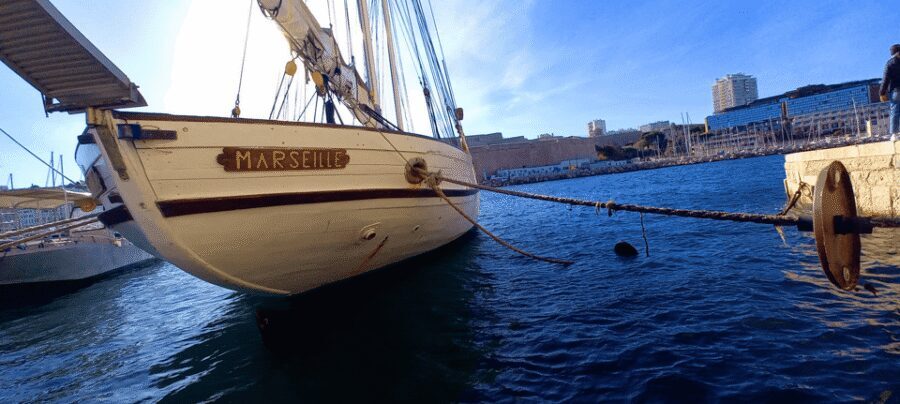
One of the first neighborhoods you’ll get real value from is Le Panier. This area is where Marseille’s creative, everyday side shows up. The walk through these pedestrian-friendly streets helps you understand why Marseille doesn’t feel like a museum city. It feels lived-in.
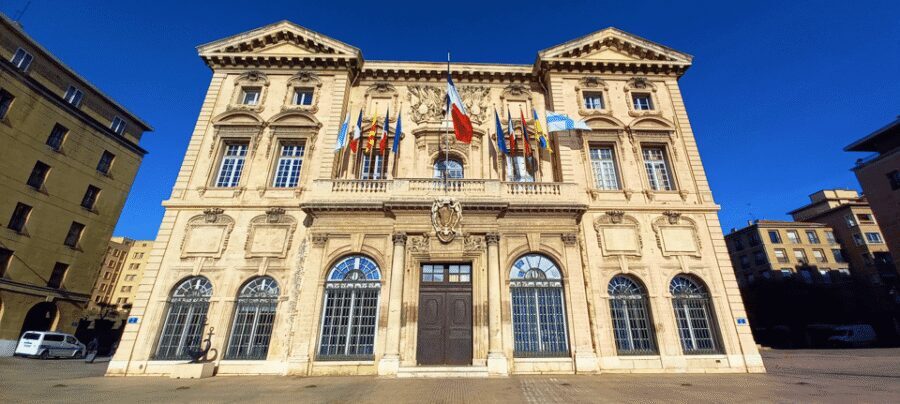
You’ll also pass Hôtel de Ville, with a guided stop that helps connect the older city blocks to broader civic Marseille. These short pauses are useful because they “slow down” the story. Instead of racing from photo to photo, you get context for what you’re seeing.
A drawback to this section: Le Panier’s streets can be compact and uneven. If you prefer wide, flat sidewalks, you’ll need to accept that Marseille’s charm comes with a bit of texture underfoot.
Old Port, a short ferry ride, and the waterfront rhythm
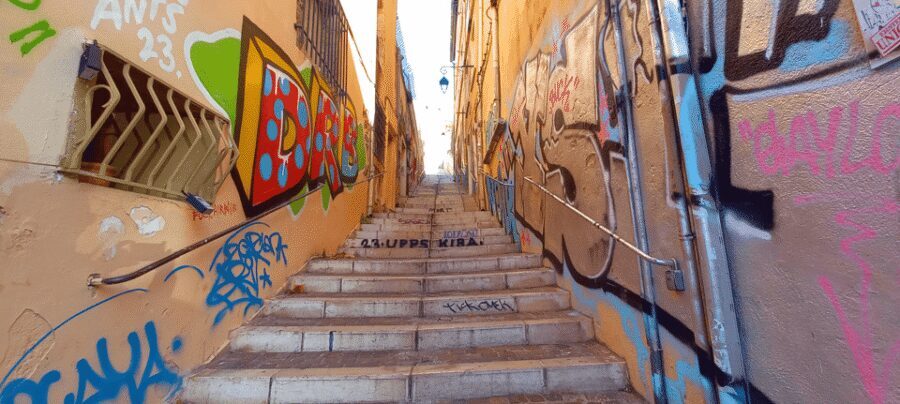
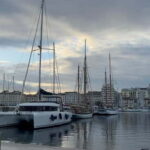
The tour swings into Old Port of Marseille—and this is a big deal. The port is the engine of the city’s identity, so you get a quick sense of why people keep returning to the water here. Even if you’ve been to a port before, Marseille has its own pace and attitude.
You’ll also include a very short ferry boat ride (about 5 minutes). Think of it as a “reset button.” You get a view that you can’t get from the quay, and it breaks up the walking without turning the tour into a travel montage.
Then you’ll continue along Cours Honoré d’Estienne d’Orves, with a guided look at the area before moving on. The key value here is contrast: port energy at the bottom, quieter neighborhoods and viewpoints soon after. That contrast helps you understand Marseille in layers rather than as one long street.
Puget Hill and Notre-Dame de la Garde: the climb for the view
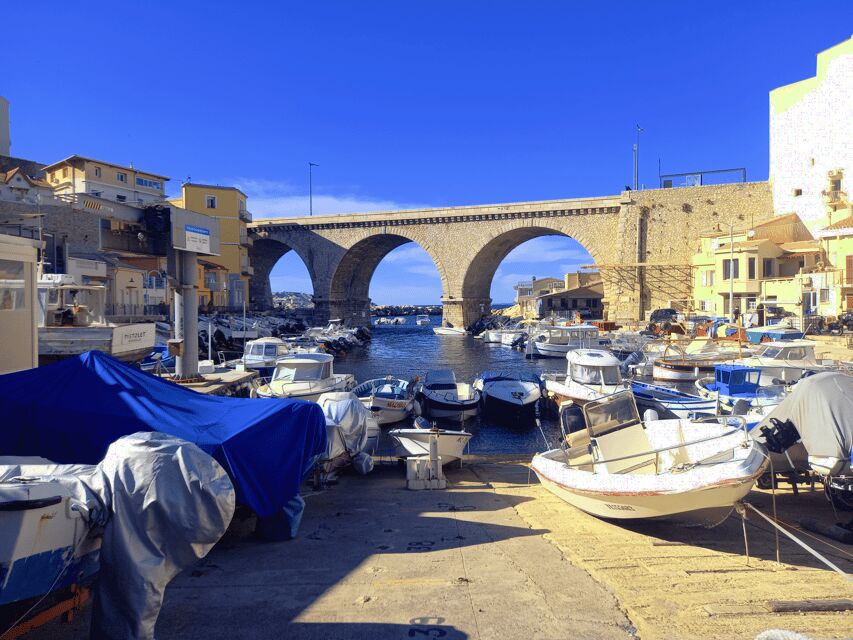
The route continues toward Parc de La Colline Puget, where you get a sightseeing stop with a more open, airy feel. It’s a good mid-route moment to check your supplies—water, sunglasses, and any snacks—because the climb ahead is part of what makes the tour memorable.
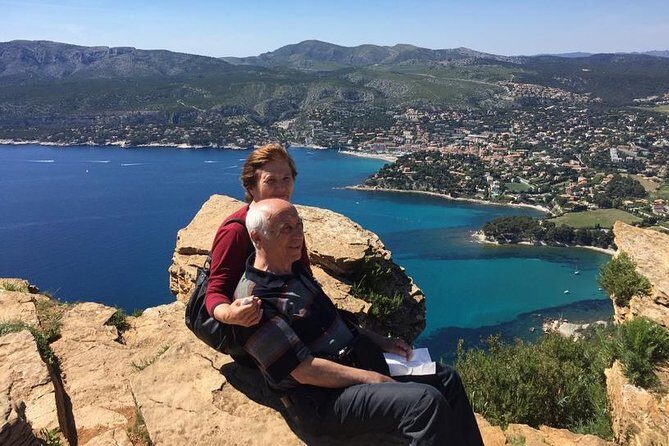
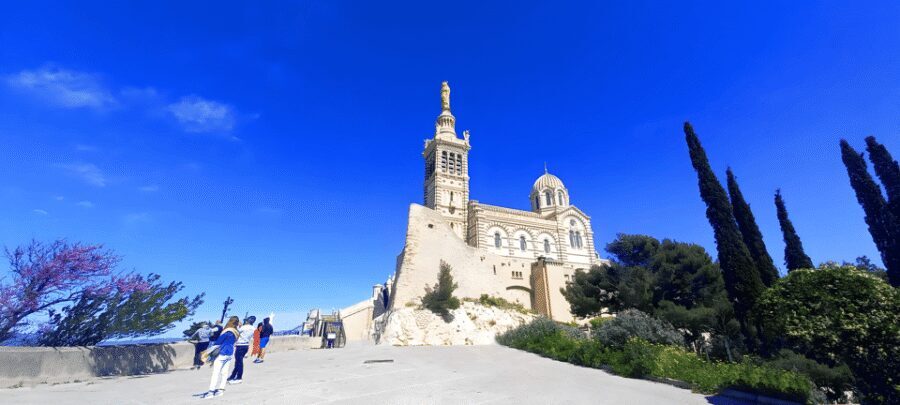
Then comes Notre-Dame de la Garde. The tour is built around the idea that you should earn the view: you ascend, then you get time at the basilica for panoramic sights of the city and sea. A solid chunk of the itinerary is dedicated to this moment, including a break time (about 25 minutes). That break is practical. It keeps the tour from feeling like a single nonstop effort.
One consideration: if you hate steps, this is the part where you’ll notice it. Still, the reward is real. Being up there makes Marseille look bigger and more organized than it feels at street level—and that’s the point.
Other walking tours we've reviewed in Marseille




Vallon des Auffes, Corniche Kennedy, and Plage des Catalans
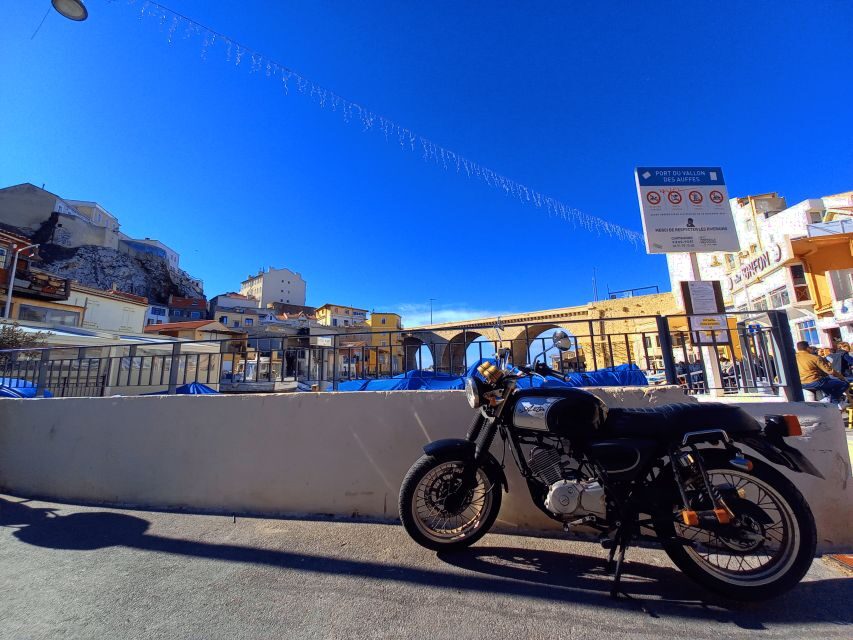
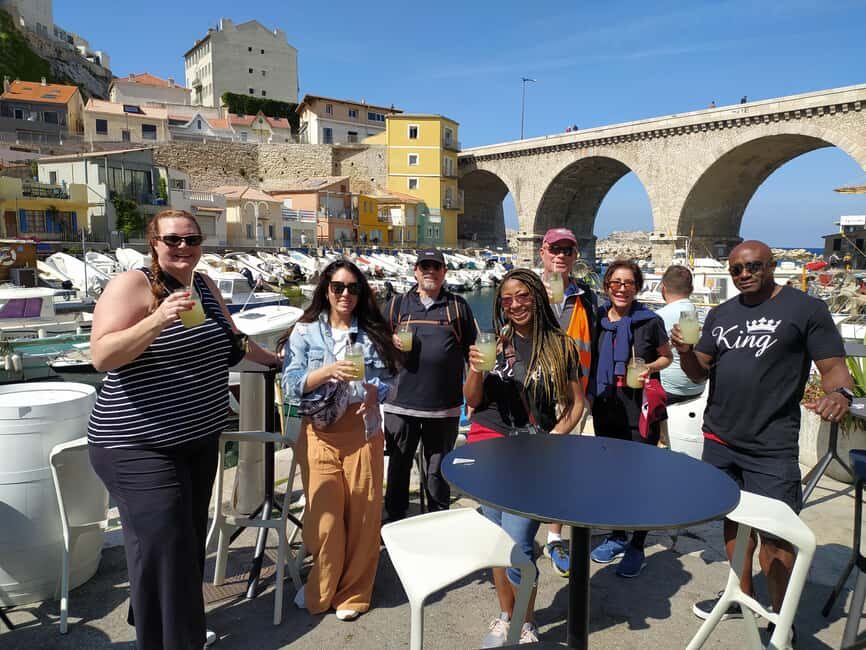
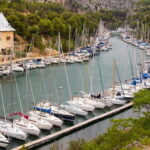
After the hilltop viewpoint, the tour transitions to the coast-side scenery. You’ll visit Vallon des Auffes, described as a quaint fishing port tucked into a rocky cove. It’s the kind of place that gives Marseille a softer edge, like the city is letting the sea do the talking for a moment.
There’s also a photo stop at the Monument aux morts de l’Armée d’Orient et des terres lointaines. Even if you don’t spend long here, the pause helps you understand Marseille’s connections beyond the immediate coastline.
Next up is Corniche John Fitzgerald Kennedy, with sightseeing time, followed by Plage des Catalans. This sequence works well because it keeps shifting the angle on the water: rocky cove, coastal viewpoints, then beach atmosphere. If you’re photographing, this is where you’ll start building a set of shots that look like Marseille rather than just France.
Potential drawback: this coastal stretch can be exposed in sun. That’s why the tour’s packing list makes sense—hat and sunscreen keep your head clear and comfortable.
Palais du Pharo and Saint Victor: finishing with a sense of place
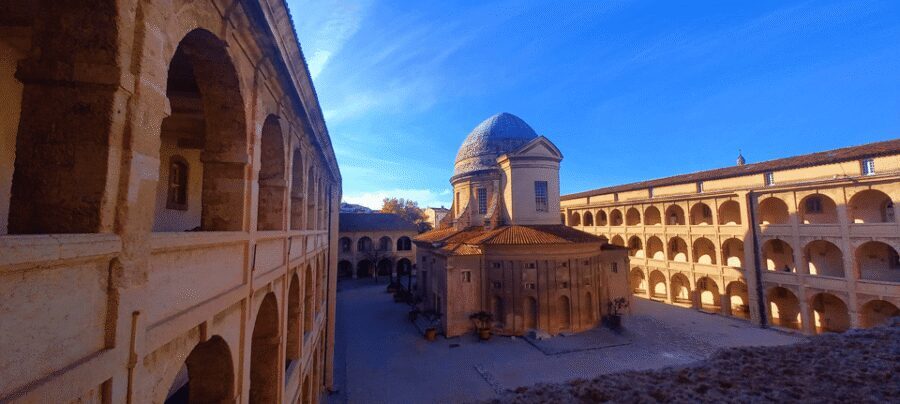
The tour moves to Palais du Pharo, where you’ll admire the architectural grandeur and get guided sightseeing time. This stop is more than a photo break. It gives you another “style” of Marseille, mixing scenic coastal views with a grander feel.
Finally, you’ll visit Saint Victor’s Abbey, with guided sightseeing. The walk ending around this historic religious site helps close the loop on the city’s age and layers. It’s a reminder that Marseille’s story didn’t start with ports and modern neighborhoods—it’s older, deeper, and still visible in how areas cluster and connect.
You’ll finish back at the Old Port of Marseille. Ending near the water is smart because it gives you an easy transition to your next plans—meal, promenade, or a simple sit-down without hauling yourself elsewhere.
Why Charles’s style makes this tour feel efficient
The most consistently praised part is Charles himself—his energy, friendly approach, and the way he keeps people engaged while still staying on schedule. In practice, that means you don’t feel like you’re trapped in a lecture. You get frequent story connections, room for questions, and explanations that make Marseille’s layout click.
A few things I’d point out as “value boosters”:
- Small group format (max 8). You notice the difference when everyone can ask questions without waiting.
- Bilingual guide (English/French). If you’re traveling with mixed-language friends, you’ll all feel included.
- Pacing that respects slower walkers. The route is long, but it doesn’t feel like it’s waiting for no one.
Also, Charles tends to share practical local advice at the right moments. You’ll finish with a better sense of what to do next—where to wander, where to eat, and what kind of Marseille experience suits your vibe.
Price, effort, and who this tour is actually for
At $58 per person for 4 hours with a bilingual guide and a full neighborhood loop, this is a fair price if you’re using the walk as your Marseille introduction. The cost only feels “high” if you plan to do almost nothing else afterward—because the real value is what you learn and how it helps your remaining time.
Here’s who this works best for:
- Adults who enjoy walking and don’t mind hills
- People who want a first-timer orientation fast
- Travelers who like stories tied to streets, not just landmarks
- Small groups who want to ask questions and keep the tour personal
Who should think twice:
- Children under 12
- Wheelchair users
- People with low level of fitness
- People over 70
- Anyone who gets stressed by uneven sidewalks and stairs
If you’re on the fence, be honest about your tolerance for uphills. This tour is not a “stroll.” It’s an active half-day with payoff.
Should you book this Marseille walking tour?
Yes, if you want the fastest way to get oriented to Marseille’s neighborhoods and viewpoints, and you’re comfortable walking about 9 kilometers over roughly 4 hours. The combination of La Major, Le Panier, Old Port (plus ferry), Notre-Dame de la Garde, and the coast stops gives you a well-rounded first look that you can build on the rest of your trip.
Don’t book if you know you’ll struggle with hills, steps, or long walking days. For everyone else, bring good shoes, pack water and snacks, and show up ready to learn the city the only way Marseille fully makes sense: on foot.
FAQ
How long is the Marseille half-day city highlights walking tour?
It lasts about 4 hours.
Where is the meeting point?
You meet right in front of Cathédrale Basilique Sainte-Marie-Majeure (La Major) in Marseille. The guide wears a white cap.
How big is the group?
The tour is limited to a small group of up to 8 participants.
What languages are offered?
The live guide offers English and French.
Is food or drink included?
No. Food and drink are not included, so you’ll need to bring your own water and eating supplies.
Which main sights are included?
The tour includes Notre-Dame de la Garde (a guided visit) and covers multiple stops such as Le Panier, Old Port, Vallon des Auffes, Palais du Pharo, and Saint Victor’s Abbey as part of the walking route.
How much walking is involved?
It covers about 9 kilometers.
What should I bring?
Bring sunglasses, a sun hat, hiking shoes, sunscreen, and your own drinking and eating supplies.
Is this tour wheelchair accessible?
No. It is not suitable for wheelchair users.
Can I cancel for a full refund?
You can cancel up to 24 hours in advance for a full refund.