Marseille’s Old Town turns into a game on your phone. I like the self-paced format, and I like that you’re walking a straight line from Fort Saint-Jean toward Port Antique without needing a guide at your shoulder. I also love that each stop asks you to look closely, then nudges you forward with a clue or puzzle. One possible drawback: the start-up can be fiddly if your phone needs app downloads, logins, or extra setup, which can eat into your first few minutes.
You’re not just buying an activity. For $8.96 per person, you’re getting a private experience limited to your group, plus a mobile ticket so you can go straight to playing once you’re there. The route is designed for about 1 hour 23 minutes, so it works well when you want big-city highlights without committing to a half-day.
Here’s what you should expect: you’ll move between landmark stops, then answer something at each one to continue. Some places are museum stops with admission not included, so you’ll be choosing what to enter versus what to view from the outside.
In This Review
- Key things to know before you start playing
- Where you begin: 1 Quai du Port and a plan you control
- Fort Saint-Jean: your first clue and big Mediterranean views
- MuCEM: solving puzzles at the Museum of Civilisations
- Regards de Provence: a quick art hit in an old port building
- Cathedrale de la Major: a compact mission at a national monument
- La Vieille Charité (2 Rue de la Charité): the one free-ticket advantage
- La Maison Diamantée: pointing stones and Medici-style influence
- Port Antique: ending where ancient Marseille leaves traces
- The smartphone game part: how to avoid the biggest frustration
- Price and value: $8.96 for a private, clue-driven walk
- Who should book this Marseille Old Town game?
- Should you book the Marseille Old Town Exploration Game?
- FAQ
- How long is the Marseille Old Town Exploration Game and Tour?
- Do I need a physical tour guide?
- Do I need GPS to play?
- Are admission tickets included for the museums and sites?
- Where do I start and where does the tour end?
- Can I cancel for a full refund?
Key things to know before you start playing
- Smartphone-led scavenger hunt: You download and follow the game through Marseille’s oldest neighborhoods.
- No GPS required: The experience is set up so you can play without GPS guiding your feet.
- Start whenever you like in the day window: The listed hours run daily from 5:00 AM to 9:00 PM.
- Museum tickets are your call: Admission is not included for most stops, with La Vieille Charité marked as free.
- Watch the tech set-up time: App download and account steps can be the most annoying part if you’re under time pressure.
Where you begin: 1 Quai du Port and a plan you control

The tour starts at 1 Quai du Port (13002), a handy location if you’re already exploring the harbor area. The format matters: you don’t need to line up behind a person holding a sign. Instead, you use your smartphone to start the game and then follow the prompts at each stop.
The whole experience is built around you controlling your pacing. You can stop, restart, and take breaks while you hunt for clues. That’s great if you like photo breaks, slow wandering, or you want to grab a drink and reset your brain.
Timing also helps. The tour runs about 1 hour 23 minutes, so even if you pause once or twice, you’re usually back out of the old-town maze at a reasonable hour. Also, since it’s a private activity limited to your group, you’re not stuck waiting for others to finish a puzzle step.
A few more Marseille tours and experiences worth a look



Fort Saint-Jean: your first clue and big Mediterranean views

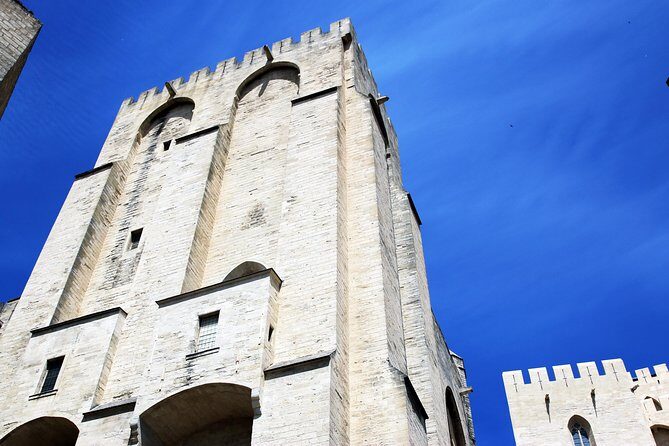
Stop 1 is Fort Saint-Jean, and it’s a smart opener. The fort is a historical monument dating back to the 12th century, and it’s also described as recently restored, which makes the area feel more visit-ready than many older fort sites.
You get to enjoy a garden stroll and some strong viewpoint time over the Mediterranean coastline. There’s also a detail worth noticing: a 130-meter rooftop walkway links Fort Saint-Jean to the MuCEM. Even if you don’t walk that full link now, knowing it connects these two landmarks gives the whole route a nice sense of momentum.
Then comes the game part. At this stop, you’ll need to look around and answer a question/challenge/puzzle to advance to the next location and learn the story tied to what you’re seeing. It’s not just a trivia quiz. The “look around” framing pushes you to pay attention to the fort features you’d normally rush past.
Admission isn’t included here, so you’ll likely do the puzzle and sight time first, and only add extra ticketed viewing if it fits your day.
MuCEM: solving puzzles at the Museum of Civilisations
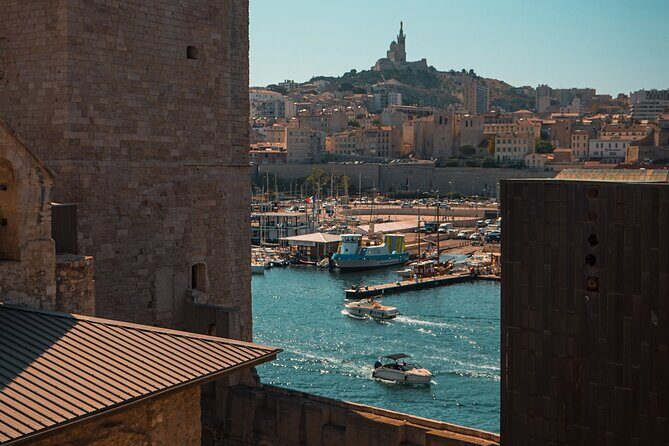
Next up is MuCEM, the Museum of Civilisations of Europe and the Mediterranean, positioned as a key centerpiece of Marseille’s European Capital Culture in 2013. Even if you’re not a museum superfan, this stop works because the subject matter is straightforward and visual: the museum focuses on European and Mediterranean civilisations and how cultures cross-fertilize in the Mediterranean basin, from historical eras through to modern times.
In game terms, you’re back to searching the exhibits or the museum environment for an answer that unlocks the next part of the route. The time at this stop is about 10 minutes, so treat it like a mission brief: look for the clue quickly, get your answer, and move on. This is not the stop to plan a slow, full museum visit unless you’ve budgeted extra time and you’re ready to split the game from your museum priorities.
Admission is not included for MuCEM, so check what you want to spend your money on. If you’d rather keep it simple, you can still get plenty from the “quest” layer plus your outside orientation of the MuCEM setting.
Regards de Provence: a quick art hit in an old port building
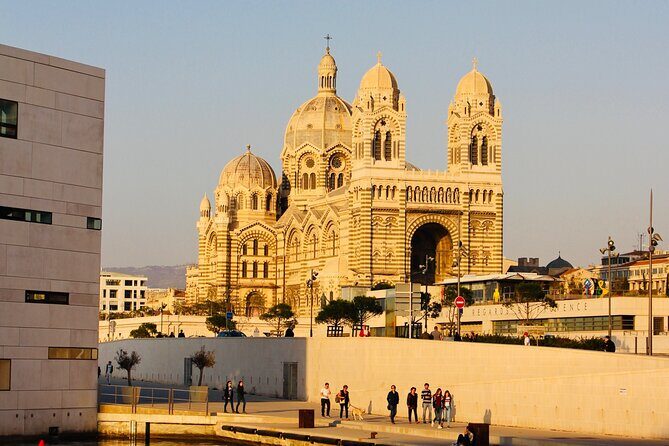
Stop 3 is Musée Regards de Provence, and it adds variety right when the main cultural institutions could start to blur together. This museum was created in 2013 by the Regards de Provence Foundation, in the former sanitary station of the port of Marseille.
What you see here is described as an art collection of 850 works, spanning modern art up to today. That’s a helpful benchmark if you’re deciding whether to spend energy inside. The game format means you’re not expected to absorb everything. You’re expected to search, answer, and keep going.
You’ll get about 10 minutes here, plus another look-around puzzle step. The pacing is short enough that you should focus on the clue, then enjoy a few extra minutes if the room catches your eye.
Admission isn’t included for this stop either, so if you choose to enter, you’re choosing that ticket cost as part of your day. If you skip ticketed entry, you can still use the puzzle moment to frame what you notice on site.
Cathedrale de la Major: a compact mission at a national monument
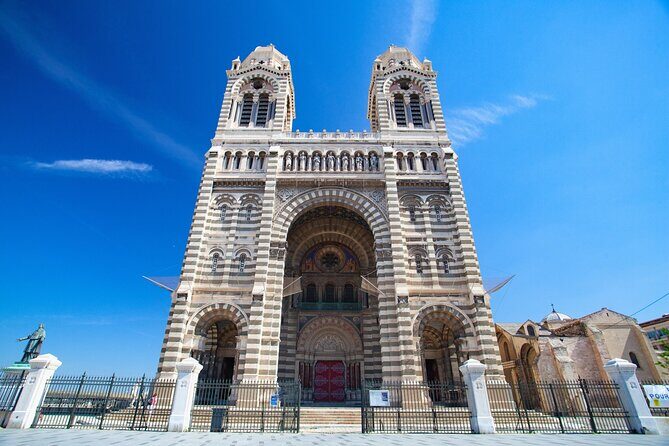
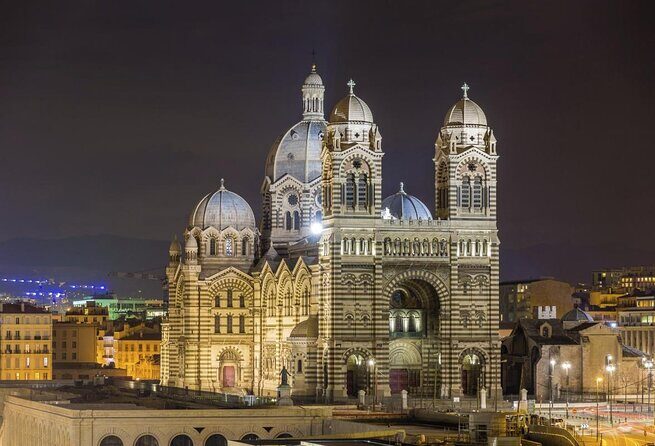
Stop 4 is Cathédrale Sainte-Marie-Majeure de Marseille (often called Cathédrale de la Major). This is a major change of tone from museum interiors to a living landmark: it’s a Roman Catholic cathedral and a national monument of France.
If you like simple factual context, you’ll appreciate the markers given: it became a basilica minor in 1896, and it’s the seat of the Archdiocese of Marseille. The data also notes the elevation in 1948 (from the diocese until its elevation).
You’ll spend about 10 minutes here, and again the game asks you to look around for the puzzle answer that advances the storyline. This stop is a good example of why the format can feel better than a standard walking tour. Instead of listening to someone recite facts, you’re actively scanning for the detail that makes the question solvable.
Admission tickets are not included, so expect this to be a “mission + atmosphere” stop rather than a long-form visit unless you decide otherwise.






La Vieille Charité (2 Rue de la Charité): the one free-ticket advantage

Stop 5 is 2 Rue de la Charité, home to La Vieille Charité. This is one of the most interesting architectural stops on the list, and it has a practical bonus: it’s marked as free admission.
La Vieille Charité began as a former almshouse, then became a museum and cultural center in the heart of Marseille’s Panier quarter. Construction is dated 1671 to 1749 in the Baroque style, based on designs by architect Pierre Puget. The building layout is also a big clue-friendly feature: four ranges of arcaded galleries in three storeys around a space with a central chapel and an ovoid dome.
The game uses this setting well. You get about 10 minutes and you’ll have to look around for the clue answer that keeps you moving. Since admission is free here, you can usually justify spending a bit more time if the central space or galleries pull you in—without adding ticket cost to your day.
For me, this is the stop that best combines “do the puzzle” with “actually enjoy the space,” because you’re not making a money decision before you explore.
La Maison Diamantée: pointing stones and Medici-style influence
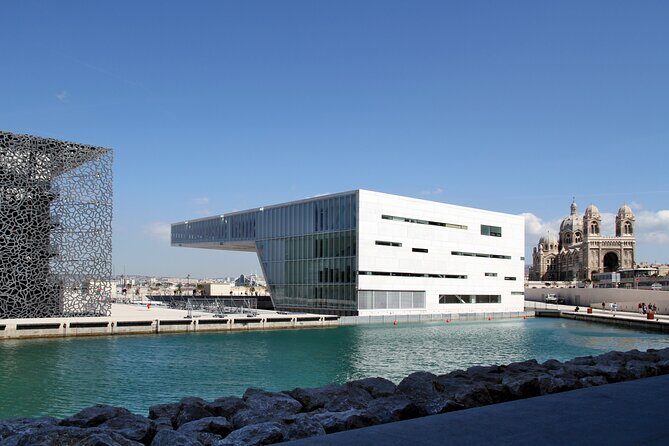
Stop 6 is La Maison Diamantée—the Diamond House—named for the pointed-stone look of its facade. It sits behind City Hall, and it’s described as one of the oldest houses in Marseille, alongside the Hôtel Cabre.
The dates are given as between the end of the 16th century and the beginning of the 17th, with a note that it may be around 1570 (with some uncertainty). The reason this place exists in this form also gets explained: it was built at the demand of wealthy Italian and Spanish traders, and the style is described as inspired by Medici Italy.
The house is tied to notable residents too. It’s noted that it long housed families such as the Saboulin family. That kind of detail is useful because it turns a facade you might otherwise glance past into a specific story tied to commerce and families.
Like the other stops, your job is to look around for the answer to the puzzle at this site. You’ll have about 10 minutes. Admission isn’t included, so treat it as a sight-and-clue stop unless you happen to find accessible areas during your time slot.
Port Antique: ending where ancient Marseille leaves traces
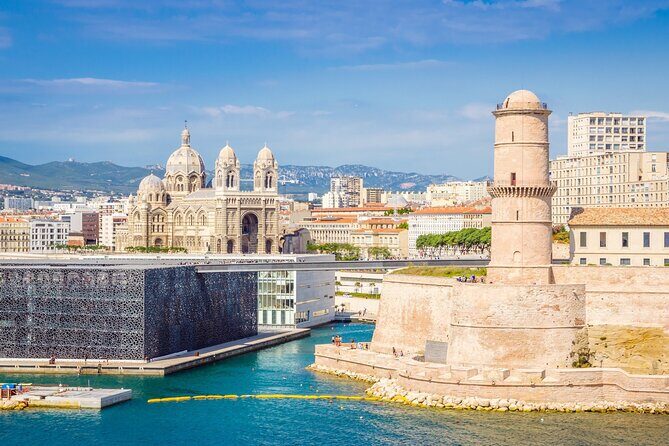
Stop 7 is Port Antique, and this is a strong ending because it ties archaeology to place. The key idea is that some of Marseille’s major archaeological finds have been incorporated into the Musée d’Histoire de Marseille. Here, the data gives you examples of what those finds include.
You’re told about fortifications of the Greek town, the quays of the ancient port, and even a 4th-century road into the town. You also get the specific “where it came from” note about Roman ramparts built out of pink limestone from Cap Couronne. That’s the kind of detail that makes your last stop feel less like a random finish line and more like a payoff to what you’ve been noticing.
The game again uses a look-around puzzle mechanic to advance the story. With about 10 minutes here, you’ll likely finish your answers, then take a final look around to connect the dots between old materials and the modern streets around you.
Your tour ends near Port Antique, close to 2 Rue Henri Barbusse (13001). Plan for this as a natural stopping point rather than a place you’ll want to linger for a full museum day.
The smartphone game part: how to avoid the biggest frustration
The biggest real-world friction point with this kind of tour is usually the start-up. One common snag is the number of steps needed to download the app and create accounts. If you arrive with low battery or you’re trying to log in on spotty Wi‑Fi, that can turn an easy 1 hour 23 minutes into a frustrating delay.
Here’s what helps:
- Do a quick tech check before you step into the route. You can at least get the app open and ready so the first clue doesn’t wait on setup.
- Plan for patience at the first puzzle. If anything seems off right at the start, stay calm and keep moving through the prompts rather than getting stuck on one screen.
- If you truly hit a wall, the provided support contact is [email protected].
Once you’re past the start-up, the format is genuinely efficient. Because it’s no GPS required, you’re not constantly checking maps, and that keeps you in the moment. You’re out walking, looking around, and solving on location.
Price and value: $8.96 for a private, clue-driven walk
At $8.96 per person, this is a low-cost way to turn Marseille’s Old Town into an active experience. The value comes from two places: you’re paying for a built route plus smartphone prompts, and you’re doing it on a private basis limited to your group.
Duration also matters. At 1 hour 23 minutes, you’re not paying for a long day of transit and waiting. You can fit it before lunch, in the late morning, or as an early afternoon reset after you’ve already explored a bit.
Group discounts are listed, which can make it even better if you’re traveling with a small crew. And the mobile ticket reduces friction at the start—once the app is working, you’re good to go.
The one “cost” to consider isn’t money. It’s your time at the beginning if your phone needs extra effort to get ready.
Who should book this Marseille Old Town game?
This works best if you:
- like wandering under your own control and don’t want to follow a person at a fixed pace
- enjoy puzzle-style learning that makes you look harder at what’s in front of you
- want a structured route that covers a lot of iconic stops in a short window
- are comfortable spending some of your day managing a smartphone-based activity
It’s also a good fit for couples and small groups, since it’s limited to just your group. And because service animals are allowed and most people can participate, it’s fairly easy to plan for in broad terms.
If you know you hate app check-in steps or you get stressed by logins, then this might be a mismatch. In that case, you’ll want to mentally reserve extra time for setup.
Should you book the Marseille Old Town Exploration Game?
I’d book it if you want a low-cost, private, self-paced way to cover major neighborhoods from Fort Saint-Jean down toward Port Antique. The clue structure makes you slow down just enough to notice real details, and the itinerary mix—fort viewpoints, big museum names, a cathedral, then Maison Diamantée and Port Antique archaeology—gives you variety without turning it into a marathon.
I wouldn’t book it last-minute if you expect tech problems. The start-up steps can be a time sink, and this experience runs on your phone more than on a human guide.
If you can handle app setup without drama, this is a fun way to experience Marseille’s oldest streets as something you’re actively doing, not just watching.
FAQ
How long is the Marseille Old Town Exploration Game and Tour?
It lasts about 1 hour 23 minutes.
Do I need a physical tour guide?
No. The experience uses smartphone instructions and is a private activity limited to your group.
Do I need GPS to play?
No GPS is required, according to the tour details.
Are admission tickets included for the museums and sites?
Admission tickets are not included for most stops. La Vieille Charité (2 Rue de la Charité) is listed as free admission.
Where do I start and where does the tour end?
You start at 1 Quai du Port, 13002 Marseille. You end near Port Antique at 2 Rue Henri Barbusse, 13001 Marseille.
Can I cancel for a full refund?
Yes. You can cancel for free up to 24 hours in advance for a full refund.