REVIEW · MARSEILLE
The Urban Hike of Marseille
Book on Viator →Operated by La Randonnée Urbaine de Marseille · Bookable on Viator
Marseille changes when you walk it. This 3h30, 10 km urban hike led by Olivier turns the city into a lesson you can feel, with 8 water points and sea-breeze shade. I love how the route chases quiet corners most people miss, and I love the payoff from Notre-Dame de la Garde. The one catch: expect steep streets and lots of steps, so you need solid shoes.
You meet at 19 Quai des Belges and start right in the Old Port zone, where your guide sets the tone and the history. The pace stays slow and relaxed, with time slots designed for heat, and the group stays small (max 10), which helps when you’re trying to hear stories in busy neighborhoods.
In This Review
- Key highlights before you set out
- Why This 10-Kilometer Marseille Walk Works
- Where You Start: 19 Quai des Belges and the Old Port Mindset
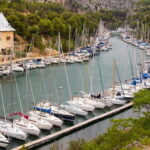
- Le Vieux Port to Vallon des Auffes: Sea History and Fisherman Houses
- Corniche Kennedy and Palais du Pharo: Views With an Imperial Backstory
- Parc Valmer to Bompard: From Olive Oil Trade to Quiet Stair Steps
- Malmousque to Notre-Dame de la Garde: Greek Accents and a 360° Payoff
- Back Down to the Old Port: André Aune, Legal Power, and a Sweet Finish
- Practical Stuff: Timing, Shoes, Water Points, and Pacing
- Who This Tour Suits Best (and Who Should Skip It)
- Should You Book the Urban Hike of Marseille?
- FAQ
- How long is the Urban Hike of Marseille?
- How far do you walk?
- Where do I meet and where does the tour end?
- How big is the group?
- What comfort and heat measures are included?
- Is there an admission fee at the stops?
Key highlights before you set out
- Small group (up to 10): easier listening, better photo breaks, less crowd stress.
- Heat-ready route: early morning or late afternoon timing, shade zones, wooded park breaks, and sun cream on hand.
- Old Port to secret coves: you walk places that are hard to reach by bus or car.
- Corniche Kennedy sea views: horizon lines and Mediterranean culture in motion.
- Notre-Dame de la Garde 360° moment: the city’s structure finally clicks into place.
- Free “admission” stops: the route is built around landmarks you can enjoy without extra ticket costs at each stop.
Why This 10-Kilometer Marseille Walk Works
This is not a museum tour where you stand still and look up. It’s a sporty urban hike where Marseille teaches itself through streets, stairs, sea air, and viewpoints. The route is about 10 kilometers in roughly 3 hours 30 minutes, and it’s designed for people who want movement but also want real context.
I like the balance here. You get history and geography as you go, but you also get the physical rhythm—pause, walk, catch a breeze, then keep climbing. The guide uses the city’s layout like a map you can experience, not just read.
Value matters, too. At $41.27, you’re paying for a guided route, pacing, and those smart comfort touches that help you enjoy a half-day instead of suffering through it. Plus, the tour includes multiple landmark stops listed as admission free, so you’re not stacking entry fees on top of the base price.
Other hiking tours in Marseille

Where You Start: 19 Quai des Belges and the Old Port Mindset
You begin at 19 Quai des Belges (13001), and your hike centers on the Old Port area. That matters because Marseille’s identity is tied to water and movement. This walk starts by getting your bearings fast—who your guide is, what you’ll cover, and how to look at the city differently once you know what you’re hunting for.
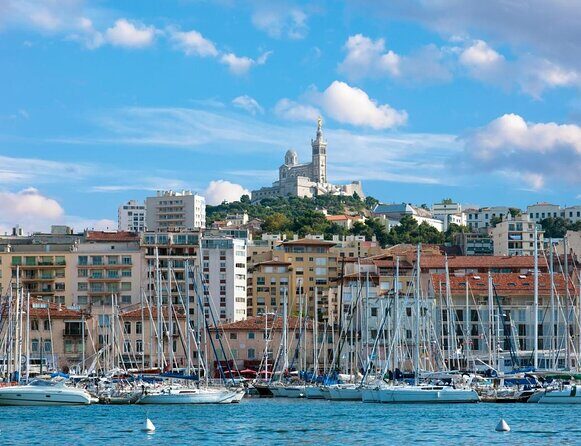
Right away, you’re in the place that shaped the city’s development. You’ll hear how Marseille grew around the Old Port—from ancient roots through major eras like Louis XIV. It’s also where your guide connects culture to geography: the port, the Mediterranean, and the influence of the wider sea world on daily life.
This first stretch sets the tone for the whole day. You stop treating Marseille as a collection of sights and start treating it as a system: hills versus water, neighborhoods versus access, and how architecture reflects long pressure from trade, migration, and economic change.
Le Vieux Port to Vallon des Auffes: Sea History and Fisherman Houses
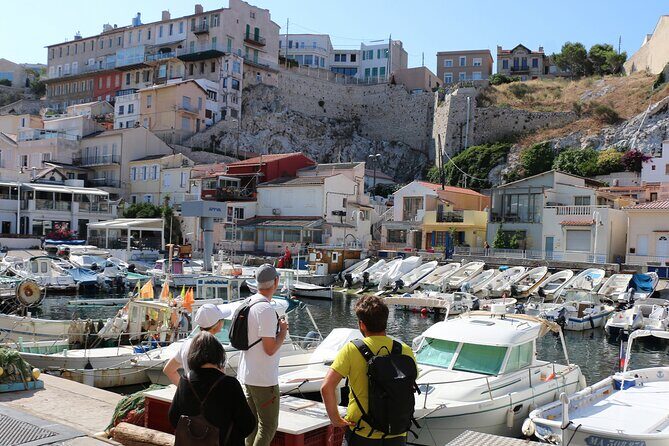
From the Old Port, the route shifts into a more intimate Marseille. The walk takes you toward Vallon des Auffes, often praised for its preservation and its photo-friendly character.
Here’s what makes Vallon des Auffes worth your attention: it’s not just scenic. It’s also a rare survival story. You’ll see fisherman houses preserved through centuries, and your guide uses that to explain how Marseille managed to protect a corner of its working past even as the city expanded hard.
So you’re not only looking at buildings. You’re learning how neighborhoods decide what to keep.
Practical note: the time at Vallon des Auffes is short, so keep your camera ready and your feet moving. You’ll get a quick window to admire the harbor mood and the texture of the architecture, then you’ll transition to bigger views.
Corniche Kennedy and Palais du Pharo: Views With an Imperial Backstory
Next comes the Corniche Kennedy, a coastal walk that frames the sea like a long postcard. This part is about atmosphere as much as facts. You’re walking with the horizon in view, and you start to understand how Marseille pays tribute to Mediterranean life, not just by building near the water, but by designing promenades that make the sea feel close.
Then the route moves to the Palais du Pharo and the nearby greenery. This stop gives you two gifts at once:
1) a pause from the hard walking,
2) and a set of views over the Old Port and the Grand Port.
Your guide also ties this location to a specific historical chapter—Napoleon III—and then uses that to talk about Marseille’s Second Empire influence. You end up thinking about the city like an urban project with stages, not a random sprawl of streets.
If you enjoy “place + story” tours, this is a strong moment. You’ll see the view, then you’ll get the why behind it.
Parc Valmer to Bompard: From Olive Oil Trade to Quiet Stair Steps
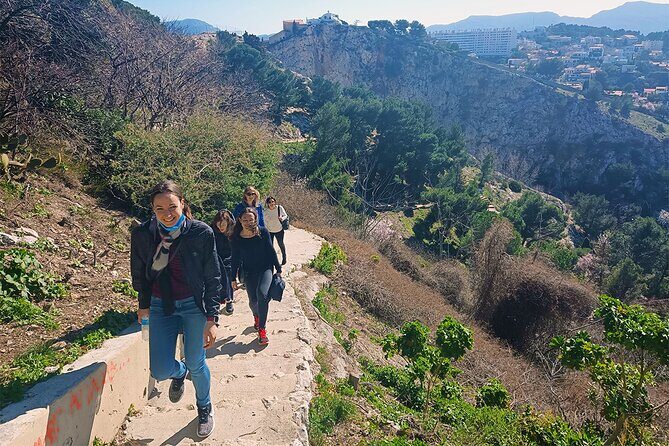
After the coastal highlights, the hike goes more inland with a change in scenery. Parc Valmer is where you go from big sea air to a bowl of greenery. The tour uses this stop to explain Marseille’s economic turns, especially the shift from older trade patterns to the current tourism industry.
A key point: you’re not just walking through a park. You’re walking through a timeline. Parc Valmer and the Villa Valmer help you connect economic history to the city’s physical evolution.
Then the route continues with the Chemin du Vallon de l’Oriol—described as a mythical path—and it signals a different kind of walking. This is where the day starts to feel more like a hike: quieter streets, a calmer feel away from the coast, and a chance to see residential character in the district of Bompard.
Your guide connects the area to bastides of the 20th century and then leads you toward Notre-Dame de la Garde. This stage is important because it gives context for the climb you’re about to do. By the time you reach the basilica area, you’ll understand why this hill matters culturally, not just visually.



Malmousque to Notre-Dame de la Garde: Greek Accents and a 360° Payoff
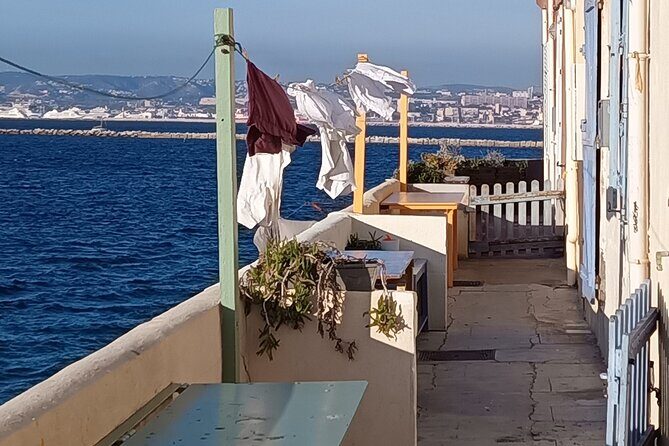
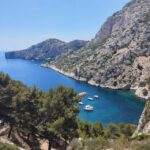
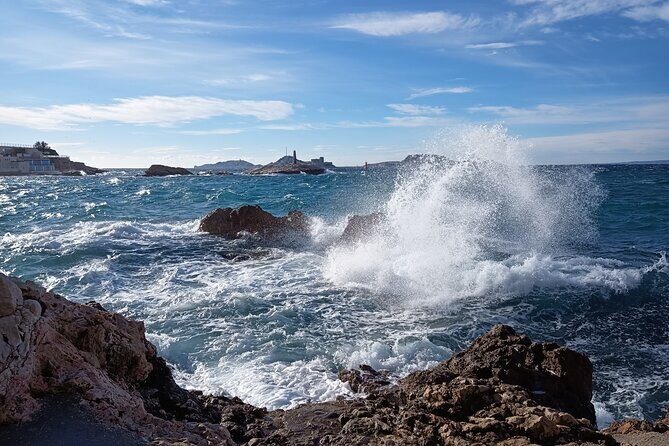
Malmousque is the kind of place you remember after you leave. The Anse de Malmousque stop brings calm back into the route: a cove, a port, and an atmosphere that feels like the city exhaling.
What I find useful here is your guide’s emphasis on how Marseille uses its shoreline. Malmousque is described with Greek accents, and it becomes a lens for understanding how neighborhoods grew fast over the last two centuries while still keeping a fishermen-side habitat feel in certain pockets.
Then you tackle the route back toward the basilica area. Boulevard André Aune is part of that return. It’s steep, but the view from above is called superb, and the walk down becomes a slow reveal of the city center. Your guide also uses this stretch for anecdotes and for architecture talk—how housing patterns and the city’s particular construction style shape what you see at street level.
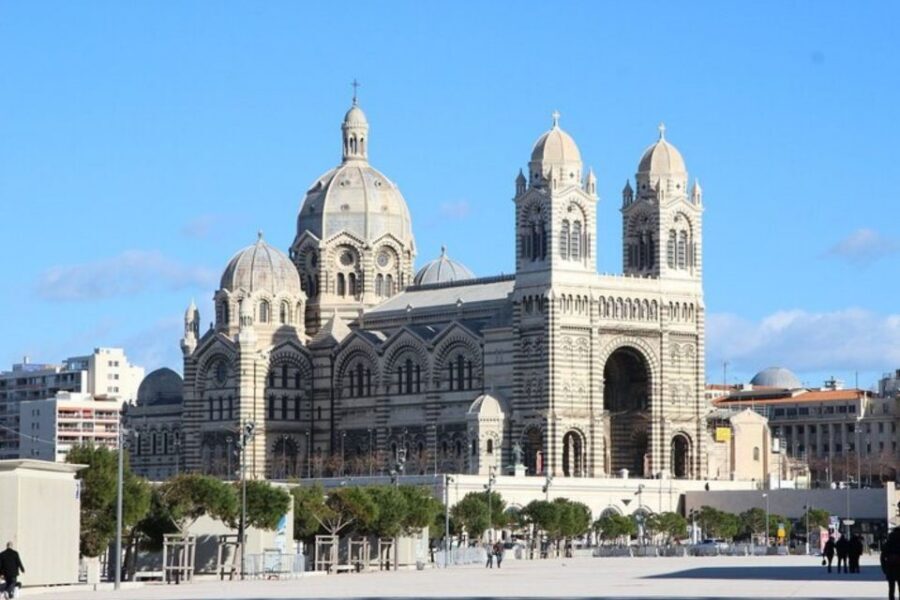
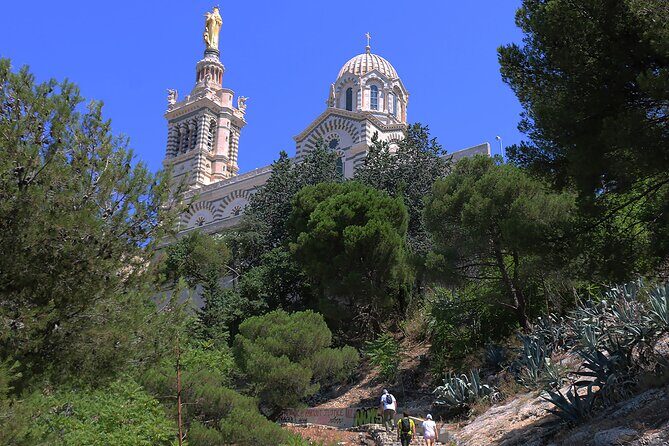
Finally, you reach the highlight: Basilique Notre-Dame de la Garde. This is the moment when Marseille clicks. The basilica and its square give you breathtaking views and a 360° perspective that helps you understand how the city is structured and where the major points of interest sit in relation to each other.
And yes, you’ll have stairs. This isn’t a flat stroll. It’s part of the value: the physical effort makes the view feel earned, and the guide ties the setting back to how Marseille’s people live with this special space.
One detail worth mentioning from the experience: Olivier sometimes points out unexpected local references along the way, including Eric Cantona’s childhood home. It’s the kind of connection that turns the route from facts-only into real street-level Marseille.
Back Down to the Old Port: André Aune, Legal Power, and a Sweet Finish
After Notre-Dame de la Garde, the hike moves back down toward the Old Port, with more of that “enter the city center” feel. Boulevard André Aune is charming in a stubborn way—steep, full of character, and clearly part of what makes Marseille’s architecture distinctive.
Then the route ends in two layers:
1) the Old Port itself, where you finish the hike with smiles and the easy option to stop for a beer or a hot chocolate on the Cours Estienne d’Orves terraces,
2) and a quick pass by major Second Empire-style buildings, including the Palais de Justice and the Commerce Court.
That final look at the Palais de Justice zone is more than a photo stop. Your guide uses the buildings as a way to talk about how Marseille has long questioned central power and how justice and lawmaking played roles over time.
It’s a strong way to end: you start with the sea and trade energy at the Old Port, and you finish with institutional power and architecture—both rooted in Marseille’s long history.
Practical Stuff: Timing, Shoes, Water Points, and Pacing

This tour is designed with heat in mind. It specifically mentions heatwave planning by lowering the temperature through practical choices:
- 8 water points along the route
- a slow rhythm with no time pressure
- time slots in the early morning or late afternoon
- sea breeze plus multiple shade zones
- breaks in wooded parks
- sun cream provided
That sounds like nice marketing, but it matters because Marseille can feel intense in the wrong hours. If you’re visiting in warmer seasons, you’ll appreciate the design choices that protect your energy.
What to wear:
- Wear good walking shoes. The steep boulevard and the basilica steps mean you need traction and comfort.
- Bring light layers. Even with shade and breezes, you’ll be walking a lot.
- If you’re sensitive to sun, trust the sun cream option but still protect yourself.
How it feels as a group:
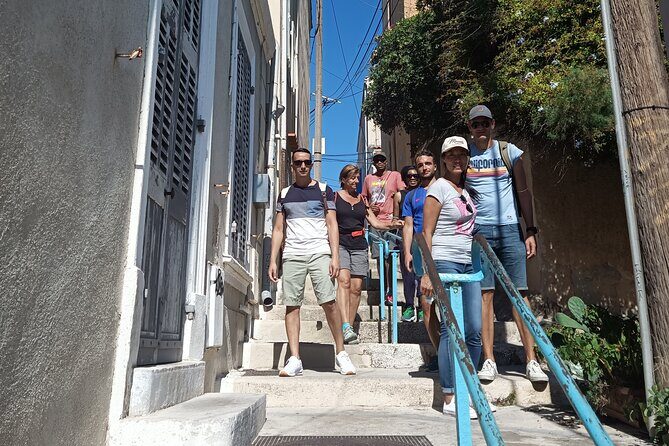
- Group size is capped at 10, which makes it easier for the guide to keep you together without rushing.
- It’s a good choice if you like active sightseeing and don’t want the “line up and shuffle” vibe.
Accessibility and logistics:
- The tour says it’s accessible to everyone, but “accessible” still means you should be comfortable walking and handling stairs.
- Service animals are allowed.
- It’s near public transportation, which makes the start at 19 Quai des Belges easier to reach.
When to book:
- On average, it’s booked about 16 days in advance, so plan ahead if your dates are tight.
- The experience requires good weather, and if it’s canceled due to poor weather, you’ll be offered a different date or a full refund.
If you like a tour where the guide keeps you moving but also keeps you thinking, this one hits the right notes.
Who This Tour Suits Best (and Who Should Skip It)
This hike is great for:
- You want city history without sitting inside.
- You like viewpoints and you’re okay with stairs.
- You want “real neighborhoods” energy, including fisherman areas and residential paths.
- You enjoy photo stops but also want a reason behind the photos.
You might skip it if:
- You need a fully flat walk or minimal steps.
- You want a slow, sit-down style tour where you never climb.
- Your plan doesn’t allow for about half a day of active walking.
Should You Book the Urban Hike of Marseille?
I think you should book it if Marseille is on your must-do list and you want a route that teaches the city instead of just showing it. The combination of Old Port foundations, coastal views, inland quiet paths, and the Notre-Dame 360° payoff is a smart arc for first-time visitors and repeat visitors who want a different angle.
Also, I like that the day is built for heat: water points, shade, sea breeze, and sun cream on hand. That practical touch is a big part of why this tour feels worth the price.
If you’re comfortable with hills and stairs, you’ll walk away with a much clearer sense of Marseille’s layout and its street-level stories—without needing a car, and without wasting time hopping between unrelated sights.
FAQ
How long is the Urban Hike of Marseille?
The tour runs about 3 hours 30 minutes.
How far do you walk?
It’s described as a 10-kilometer hike.
Where do I meet and where does the tour end?
You start at 19 Quai des Belges, 13001 Marseille, France, and the activity ends back at the meeting point.
How big is the group?
The tour has a maximum of 10 travelers.
What comfort and heat measures are included?
The route is planned with heat in mind, including a slow pace, early morning or late afternoon time slots, sea breeze and shade zones, breaks in wooded parks, water points (8), and sun cream available.
Is there an admission fee at the stops?
The listed admission for the stops is free, and you’ll mainly be touring outdoors and around landmarks.