REVIEW · MARSEILLE
Marseille Guided Tour for 4 Hours with a Bilingual Local Guide
Book on Viator →Operated by Marseille Tour · Bookable on Viator
Marseille on foot beats the big bus. I like this tour because it keeps you moving at street level, not stuck on a coach, with Charles Mondon guiding a small group of up to eight and pointing out what you would miss on your own. You get hilltop landmarks, Old Port context, and a route that feels made for wandering.
What I like most is the personal wrap-up email at the end, with tailored suggestions based on what you told your guide you want to see and do. It’s a nice way to convert a few hours of orientation into a plan for the rest of your trip, right when you finish at the heart of Marseille.
One drawback to weigh: it’s a stairs-and-hills walk. Even if the pacing includes rest breaks, the route can add up to about 20,000 steps on incline-heavy terrain, and it isn’t recommended for travelers aged 70+ or anyone who struggles with steep climbs.
In This Review
- Key points worth knowing before you go
- A small-group Marseille walk that starts at La Major and ends at Vieux-Port
- Cathedrale de la Major: Neo-Byzantine domes up close
- Le Panier’s maze: narrow streets and Mediterranean-North African influence
- Canebière: Marseille’s main street, plus the port story behind it
- Basilique Notre-Dame de la Garde: panoramic views and the climb reality
- Vallon des Auffes: a quiet fishing harbor break
- Palais du Pharo: palace gardens plus Old Port context
- Abbaye Saint-Victor: Romanesque calm near Vieux-Port
- Walking distance, hills, and why shoes and water matter here
- Price and value: what you get for about $60.47
- Best time to book and what to do once you’re done
- Should you book this Marseille highlights walk?
- FAQ
- How long is the Marseille guided tour?
- What language is the tour offered in?
- What is the group size limit?
- Where do I meet the guide and where does the tour end?
- Is admission included for the stops?
- Is lunch or bottled water included?
- Is the tour suitable for older travelers or limited mobility?
Key points worth knowing before you go
- Small-group feel (max 8 people): more questions answered, easier pacing, and less traffic-wrangling than big bus tours.
- Hilltop payoff, early: you work up to major viewpoints with wide Med views and city panoramas.
- Seven landmark stops, no wasted backtracking: you connect north-to-south parts of Marseille on foot.
- Free entry at the listed stops: each site’s time block is marked free, so you’re not blindsided by admissions during the walk.
- Real local context: the guide ties neighborhoods and monuments to Marseille’s port story, not just sightseeing checklists.
- Ends at Vieux-Port Metro: you finish where it’s easy to keep exploring by bus, subway, boat, or on foot.
A small-group Marseille walk that starts at La Major and ends at Vieux-Port
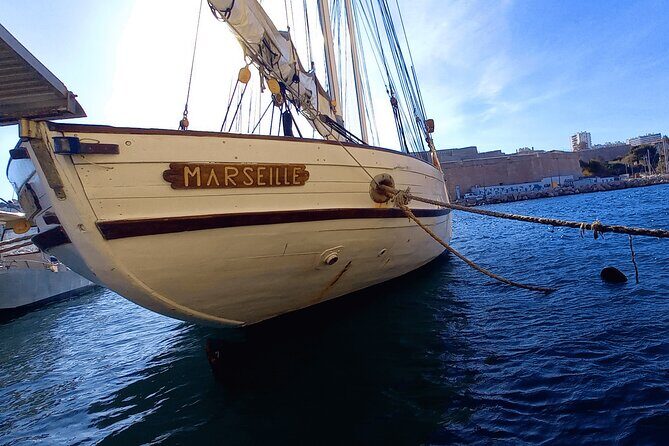
This is a 4-hour guided walking experience that runs with a start time of 9:00 am. You meet at Cathédrale La Major (Pl. de la Major, 13002 Marseille) and the tour concludes at Métro Vieux Port in the Old Port area, which is exactly where you want to be if you plan to keep going after your walk.
The format matters. With up to eight travelers, Charles can slow down when someone needs it, answer questions without rushing, and adjust the route if weather turns. It also means you’re less likely to get herded around and more likely to actually hear why each place matters.
The tour is sold as private and guided, and it uses a mobile ticket, with service animals allowed. It’s listed as requiring moderate physical fitness, so the biggest real factor is whether you’re comfortable with long walking stretches, stairs, and slopes.
Other private guided tours in Marseille



Cathedrale de la Major: Neo-Byzantine domes up close
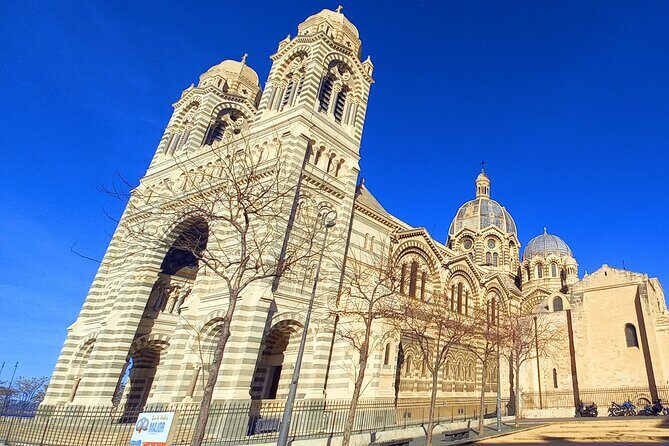
You begin at Cathedral of La Major (Cathédrale de la Major), a major Roman Catholic landmark in Marseille known for its Neo Byzantine look. Even before you leave the start area, you’re in a strong visual contrast: grand domes and a big, formal interior right at the beginning of an otherwise very street-level day.
This stop works well for orientation. You get a sense of Marseille as a city with layers—religious, cultural, and architectural—before you shift into neighborhoods and viewpoints. The time here is short (about 10 minutes), and the tour description notes free admission, which keeps things efficient.
If you prefer places that are quick but meaningful, this is a good start. If you like to linger inside churches, you might want a follow-up visit later, since the tour is structured to keep moving.
Le Panier’s maze: narrow streets and Mediterranean-North African influence
Next comes Le Panier, Marseille’s historic district of narrow lanes, colorful buildings, and a mix of Mediterranean and North African influence. The walk through here is where you feel Marseille as an actual neighborhood, not just an attraction.
You’ll get about 50 minutes in this area, and the best part of the timing is that it’s early enough in the tour that your legs still feel fresh. Expect it to be a slower-feeling stop with room for conversation and small turns you’d probably skip if you were on your own without local guidance.
One practical note: Le Panier is exactly the kind of place where footwear matters. Uneven pavement and stair steps are part of the charm, so wear shoes you trust for grip.
Canebière: Marseille’s main street, plus the port story behind it
After the side streets, the tour brings you to La Canebière, the famous street running between north and south toward the Old Port. This is a classic Marseille axis, and it’s also an easy place to connect landmarks without needing museum time.
You’ll spend around 30 minutes here, learning the history and the significance of major monuments around the route, including references tied to the Old Port and the Opera House. For me, this is where the guide’s role really helps: street names and broad avenues can feel generic until someone ties them to how the city grew.
The main drawback is simple: if you’re hoping for more hidden alleys here, Canebière is more linear and open. It’s still worth it because it sets up what you’ll see from above later.
Basilique Notre-Dame de la Garde: panoramic views and the climb reality
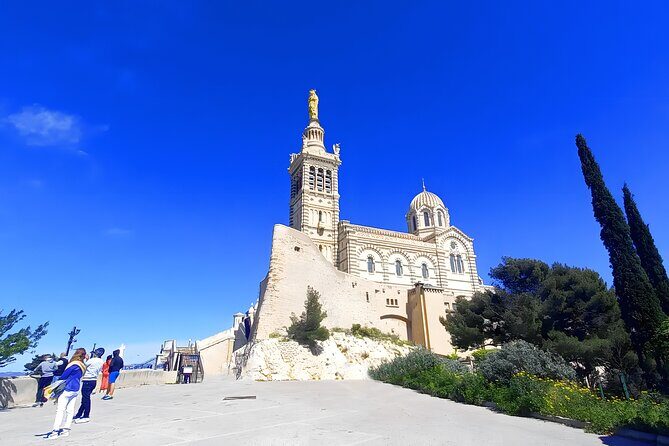
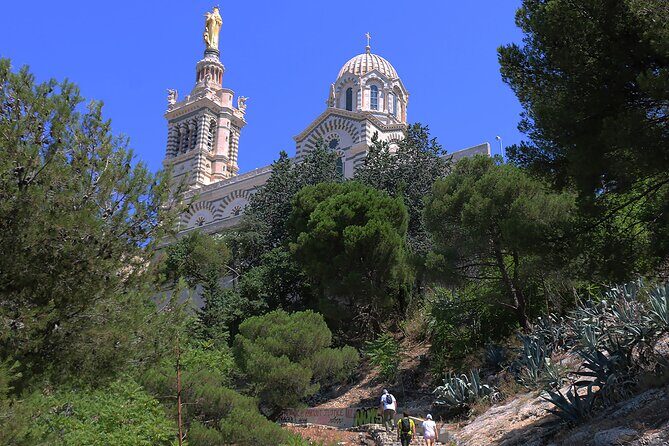
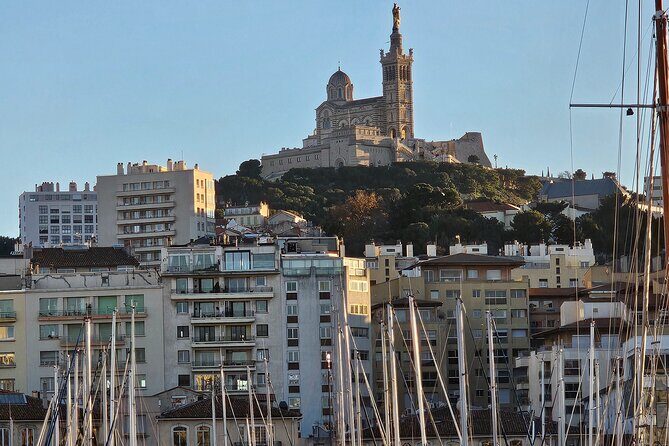
Then you go up to Basilique Notre-Dame de la Garde, the hilltop basilica that looks over Marseille. This stop is built for the payoff: panoramic views of the city and the Mediterranean Sea, plus the basilica’s mosaics and the well-known golden statue of the Virgin Mary.
Time here is about 40 minutes, with the listed admission noted as free. This is also where stamina becomes real. Multiple tour notes and on-tour experiences point out that the route includes a lot of stairs and elevation, and many people find this is the steepest section.
The good news is that Charles tends to adapt. If the group needs a lighter option, some visitors have noted the guide helps with alternatives such as taking a bus ticket to reduce the steepest climb for those who can’t do every step. That kind of problem-solving is a big part of why this tour earns high marks.
Other guided tours in Marseille


Vallon des Auffes: a quiet fishing harbor break
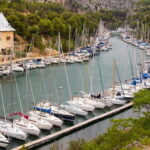
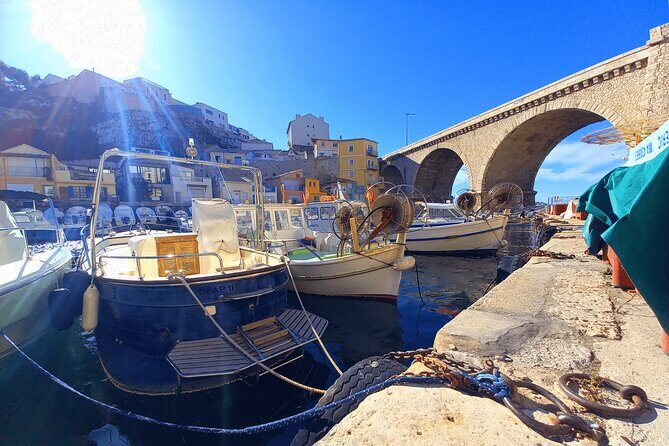
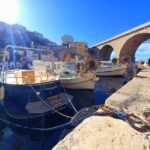
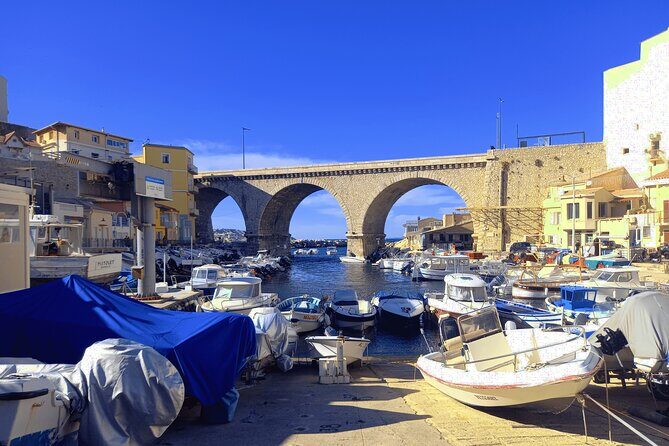
After the big view stop, you shift to a calmer scene at Vallon des Auffes, a fishing village tucked between rugged cliffs and the sea. This is the part of the tour that changes the mood fast: from hilltop panoramas to a sheltered harbor with boats and waterfront restaurants.
You’ll have about 50 minutes here. Even if you don’t stop for a full meal, it’s a chance to breathe and take in the coastal setting at ground level. The tour description sets this up as a serene escape from the city buzz, and it works because the views are close and tangible rather than distant.
If you’re planning to snack, this is a natural moment. Bottled water isn’t included, so it’s also smart to top up here if you didn’t bring enough.
Palais du Pharo: palace gardens plus Old Port context
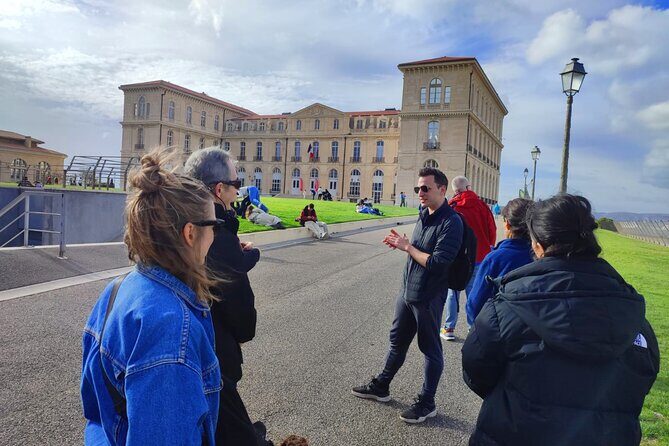
Next: Palais du Pharo, an elegant historic palace perched on a promontory overlooking the Old Port. Expect a step up in atmosphere—majestic architecture, lush gardens, and terraces that make it easier to understand Marseille’s geography.
Time here is about 40 minutes, and the tour connects the dots around the Old Port by pointing out monuments such as Fort Saint Jean, the MUCEM, and Cosquer’s museum. You’re not spending time inside those museums during this walk, but learning where they sit helps you decide later whether they’re worth a separate visit.
This stop also works as another viewpoint segment, with harbor and skyline views. For anyone who likes photos, it’s one of the better points to stop without feeling like you’re rushing.
Abbaye Saint-Victor: Romanesque calm near Vieux-Port
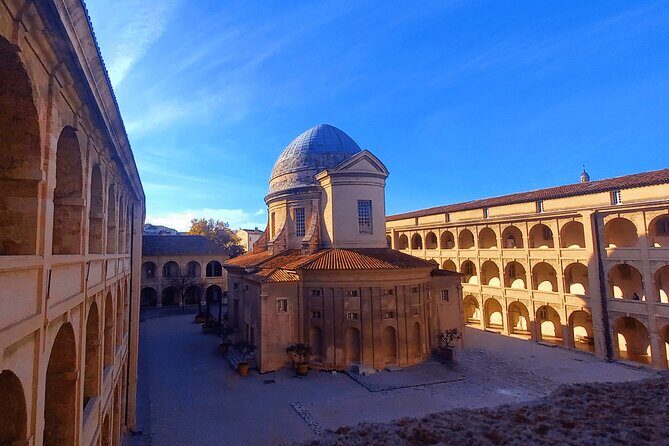
You finish with Abbaye Saint-Victor, an ancient monastery near the Old Port area. This is a strong closing contrast: after climbs and sea scenery, you get a quieter, more reflective site with Romanesque architecture and a chance to see parts of the monastery complex and its crypts.
The time is shorter, around 20 minutes, and the site is listed as free for the tour’s stop. If you like history you can feel in the stones, this is a satisfying last chapter. If you prefer action over atmosphere, you might wish for a bit more time here, but the tour stays balanced by keeping the day at about four hours.
After this, you’re essentially back at the center of Marseille, ending at the Vieux Port Metro hub. That makes it easy to hop into your next plan without needing long transit.
Walking distance, hills, and why shoes and water matter here
This tour is marketed for moderate physical fitness, and the biggest recurring practical point is the amount of walking and steep movement. One helpful reality check from similar experiences: people can hit 20,000 steps and still feel like the day has barely started, because the route includes stair climbs and elevation changes.
The guide pacing helps. Many accounts highlight rest breaks after harder inclines and the guide’s willingness to adjust transport options when needed. Still, you should show up ready for uneven footing and lots of stair steps, especially around the basilica.
Bring water even though bottled water isn’t included. The tour notes that bottled water and lunch are not provided, but guides may help if you’re short—some people have reported the guide encouraging an early water purchase on hot days. If it’s warm when you’re visiting, plan as if you’ll need it.
Price and value: what you get for about $60.47
At $60.47 per person for roughly four hours, you’re paying for three things: a route that’s hard to piece together on your own without context, a guide who can answer questions as you walk, and a small group size.
A big part of the value is that the tour is built to see multiple neighborhoods and major landmarks in one go: La Major, Le Panier, Canebière, the hilltop basilica, Vallon des Auffes, Palais du Pharo, and Abbaye Saint-Victor—then you land in the Old Port area. If you self-guided, you’d spend extra time figuring out what to prioritize, and you might miss the story connections between neighborhoods and the port.
Then there’s the wrap-up email. You don’t just leave with photos—you get individual recommendations from the guide after the tour. That’s a practical add-on, especially if you’re only in Marseille for a short visit and want your next day to feel planned rather than guessed.
What’s not included is also clear: lunch and bottled water. That keeps the price lower, but it means you should budget a snack stop and plan hydration.
Best time to book and what to do once you’re done
I’d treat this as an early-trip move. Getting your bearings fast matters in Marseille, and this route naturally introduces the city’s big themes: port history, hilltop viewpoints, and neighborhood texture from Le Panier to the harbor edges.
Because the tour starts at 9:00 am and ends at Métro Vieux Port, it’s easy to turn the rest of your day into a mix of walking and transportation. The tour description even points out that from the Old Port crossroads, you can continue by bus, subway, boat, or on foot.
If you want to maximize value, take this on your first or second day so you can ask follow-up questions during the walk and then use the guide’s personalized recommendations immediately afterward.
Should you book this Marseille highlights walk?
Book it if you want a high-impact Marseille orientation in a small group, and you like learning from a local guide while walking real streets. The hilltop sequence plus the coastal stops make it feel like Marseille across elevations, not just one flat sightseeing loop, and the guide’s personalized recommendations can steer the rest of your trip in a useful direction.
Skip it or pick another option if you know you struggle with long stair climbs or steep inclines. This is not a sit-and-see tour. It’s a walking workout with cultural stops, and the day can involve a lot of steps even with breaks.
If you’re comfortable with moderate fitness, bring solid shoes, plan for water, and show up ready to move. Then this becomes one of the smartest ways to understand Marseille quickly and enjoy the city with less guesswork.
FAQ
How long is the Marseille guided tour?
It’s about 4 hours.
What language is the tour offered in?
The tour is offered in English.
What is the group size limit?
The maximum group size is 8 travelers.
Where do I meet the guide and where does the tour end?
You start at Cathédrale La Major, Pl. de la Major, 13002 Marseille. The tour ends at Métro Vieux Port in Marseille.
Is admission included for the stops?
The tour’s listed time blocks for the stops indicate free admission for each site.
Is lunch or bottled water included?
No. Lunch and bottled water are not included.
Is the tour suitable for older travelers or limited mobility?
The tour requires moderate physical fitness and is not recommended for travelers aged 70+. It also involves stairs and hills.