REVIEW · MARSEILLE
Marseille: Sightseeing E-Bike Tour 2
Book on GetYourGuide →Operated by Station Bee's · Bookable on GetYourGuide
Marseille by e-bike feels like shortcutting the hills. In about two hours, you glide past the harbor and major monuments with a guide, powered by electrical assistance when the streets tilt.
I like two things most: the structured photo-and-story stops (so you’re not just biking by scenery) and the calm, practical coaching that gets everyone set up—helmet first, then saddle height, gears, and how to handle Marseille streets.
One thing to consider: this is still a real bike ride. Even with the help, you’ll want comfortable shoes and patience around viewpoints and city traffic turns.
In This Review
- Key highlights you’ll actually feel
- The route in plain terms: about 17 km, easy/medium pace
- Meeting at 2 Rue de la Loge and getting your e-bike ready
- Museum of European and Mediterranean Civilisations to the Old Port
- City Hall, L’Ombrière, and harbor architecture by Norman Foster
- Le Pharo and the Corniche Kennedy viewpoint run
- Hélice de César and the Château d’If story
- Notre-Dame de la Garde: best views, short time, real payoff
- How long it really takes, and what you’ll do with the rest of your day
- Price and value: why around €39–$46 can make sense here
- Who should take it, and who should skip it
- Should you book the Marseille e-bike monuments tour?
- FAQ
- What’s the duration of the Marseille e-bike tour?
- What’s included in the price?
- Is MuCEM included in the tour stops?
- Where do we meet the guide?
- How big is the group?
- What languages are available for the guide?
- Is this tour suitable for children or heavy riders?
- What should I bring?
- Can I cancel if plans change?
- Is a visit inside Notre-Dame de la Garde included?
- Should I go if I don’t want to pedal uphill much?
Key highlights you’ll actually feel
- New e-bike comfort + helpful power for Marseille hills without draining your legs
- Small group size (10 max) that keeps the pace human
- Norman Foster’s L’Ombrière and the Vieux Port area built into the route
- Corniche Kennedy for long sea-sky views and photo moments
- Notre-Dame de la Garde stop with time for a quick visit if you want it
- Guide-led stops and history context from Museum of European and Mediterranean Civilisations to the Château d’If area
The route in plain terms: about 17 km, easy/medium pace
This tour is designed as a smooth “big sights in one loop” ride. You’ll cover roughly 17 km, with an easy/medium difficulty rating. Translation: you’re not training for a marathon, but you are riding a bike through a working city, including some uphill sections.
Timing is listed a bit differently depending on how the day runs. The overall experience is commonly shown as 2 hours, and the detailed plan stretches closer to about 2.5 hours. Either way, you’re getting a packed route with multiple short stops rather than one long museum visit.
The smartest part is how the ride is paced. Most stops are photo stops with guided context—so you can keep moving, catch the view, and still understand what you’re looking at. You also get a couple of practical breaks: there’s a brief stop for a toilet break on the Corniche (around 5 minutes), and Notre-Dame de la Garde gets a longer pause.
Because you’re on a small group, the guide can adjust the rhythm. The route matters too: it’s built to hit the places that make Marseille feel like Marseille—harbor angles, sea cliffs, and the landmark basilica.
If you want a “bus tour” vibe where you sit the whole time, this won’t match your style. If you want movement, fresh air, and the chance to pause exactly where the best views are, it fits well.
Other e-bike tours we've reviewed in Marseille
Meeting at 2 Rue de la Loge and getting your e-bike ready
The meeting point is at 2 Rue de la Loge, 13002 Marseille, at the bike shop. You’ll meet your guide there and start with a quick setup routine.
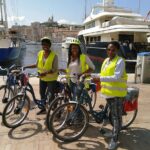
You get safety gear: helmets are distributed, and you also get saddlebags for small essentials. Then comes the part that makes the whole tour feel easier: the guide explains how the e-bike works—how to use the gears and how to control the electrical assistance.
After that, you do a short test ride and a final check. The important bits are things like saddle height, brakes, and a few reminders about riding in the city—especially around the MuCEM area. This isn’t just busywork. When you’re about to roll into coastal roads and viewpoint climbs, a quick fit check prevents that annoying first-10-minutes discomfort.
One more detail I like: the guide doesn’t rush you into motion. You’re meant to leave the shop ready, not guessing. That’s especially valuable if you’re not a regular bike rider.
Museum of European and Mediterranean Civilisations to the Old Port
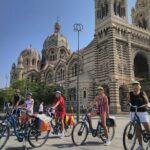
Early on, you start with the Museum of European and Mediterranean Civilisations (MuCEM) area. You’ll get a photo stop with a guided moment. Even if you don’t go inside, the guide sets the stage so the waterfront and architecture start making sense as you ride.
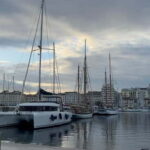
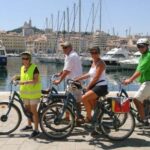
Then you roll toward the Old Port (Vieux Port). This is where the tour becomes more than sightseeing. Old Port is about angles: sea views, working harbor energy, and the sense that the city is built around movement. You’ll stop for photos and hear the guided context, but you still keep the bike moving so you don’t lose the flow.
This part of the ride is also practical. You’re warming up without feeling like you’re “going uphill immediately.” You get to settle into the e-bike assist settings while the guide explains how the day will unfold.
Drawback to note: this is a harbor area, so it can be busy. If you’re sensitive to crowds or slow foot traffic, keep a little extra awareness around photo stops.
City Hall, L’Ombrière, and harbor architecture by Norman Foster
From the harbor zone, you ride along toward Marseille City Hall, then onward past L’Ombrière.
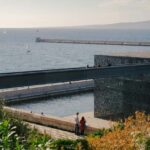
L’Ombrière is one of those stops that’s worth making time for because it’s so specific: it was designed by Norman Foster. The guide gives the story behind it, and you’ll get the chance to see it as part of the larger harbor landscape rather than a random architectural moment.
You also get the classic “Harbor to viewpoint” transition here. The route continues toward the Pharo side, so even when you’re still near the water, the ride is preparing you for the sea-and-stone angles coming next.
A small tip: if you’re the type who likes to take photos quickly, you’ll still want to pause long enough to understand what you’re photographing. The guide’s talk helps you see the lines and purpose of what you’re looking at, especially with a structure like L’Ombrière.
Le Pharo and the Corniche Kennedy viewpoint run
Next up is Le Palais du Pharo. You’ll have another photo stop and guided context, plus a short hop-on stop element in the day’s plan. This is one of those parts where you’ll feel the tour switch gears into “views and panorama.”
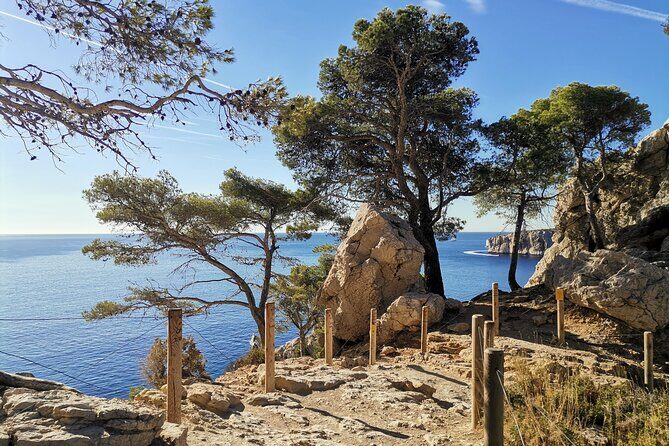
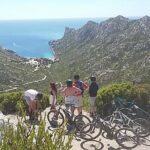
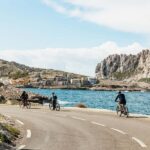
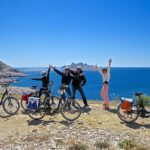
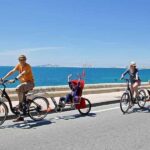
Then you head for Corniche John Fitzgerald Kennedy. This is the long scenic stretch that Marseille does very well: sea-air cycling, sweeping vistas, and plenty of reasons to slow down for photos.
The tour plan includes a toilet break at Catalans of about 5 minutes—short, but helpful. You don’t want to “save it for later” when you know you’re headed to Notre-Dame de la Garde afterward.
During the Corniche segment, the guide gives guided sightseeing and historical context around what you’re seeing. You’ll also pass by the area where the monument to colonial armies (Armée d’Orient et des Terres Lointaines) comes into the story. That ties into the day’s next key element: the Château d’If history.
If you’re trying to decide whether this tour is worth doing, this Corniche stretch is a big part of the value. You’re paying for transportation plus guide context plus the chance to experience the city’s dramatic coastline without battling it alone.
Other cycling tours in Marseille


Hélice de César and the Château d’If story
As you continue along the Corniche, the tour plan includes a stop for Hélice de César, the sculpture.
This is the kind of stop that sounds like a quick photo moment—until the guide frames what it represents. It adds variety so the ride doesn’t feel like one long “look at the view” sequence. You get a different kind of Marseille landmark: one that’s more about artistic expression and historical reference.
Just after that, the guide loops back to the Château d’If connection through the Armée d’Orient et des Terres Lointaines monument. The guide presents the story and history related to that area. Even if you’ve heard of Château d’If in other contexts, hearing how it connects to this specific shoreline viewpoint helps you place it in the geography.
This section is also a good reminder of why e-bikes work here. The coastline roads have enough variation that you want stability, momentum, and assist when needed.
Notre-Dame de la Garde: best views, short time, real payoff
The day’s most famous stop is Notre-Dame de la Garde. You’ll reach it by riding toward it via Avenue des Roches.
At Notre-Dame de la Garde, you’ll get:
- a photo stop
- guided context and explanation of the basilica
- a longer pause with free time
The plan notes that a visit is possible, with a time window of about 10–15 minutes. That’s not a long church visit, but it’s enough to step in briefly, look around, and get that “I’m really here” feeling—especially if you’re short on time in Marseille.
You’ll also get a strong aerial-style viewing advantage from the stop. The structure of the tour makes sense here: Notre-Dame de la Garde is the payoff after you’ve already cycled through the harbor and coastline. By the time you arrive, you understand the city’s layout better.
Possible drawback: this area can draw crowds. The tour includes hop-on style timing, so you can manage your own pace a bit, but you’ll still be dealing with people at a landmark. Keep an eye on your bike and don’t block others during photos.
When you finish this stop, you ride back toward the shop to wrap up.
How long it really takes, and what you’ll do with the rest of your day
The tour ends at the bike shop at 2 Rue de la Loge, followed by a debrief with the guide. This is more useful than it sounds. You’ll get suggestions for what to do next, based on your interests.
The guide may invite you toward nearby ideas like:
- the Tour St Jean Gardens
- the MuCEM
- exploring historic neighborhoods like le Panier
- shopping options around Terrasses du Port
This is where the tour becomes a springboard. You don’t just leave with photos. You leave with a simple next-step plan for the hours after you bike back—especially valuable if you want to stay in the city without hopping on another bus.
Also, the tour includes photo moments during the ride. You might end up with pictures taken during stops, which is a nice bonus when you’d rather ride than stop to constantly re-frame shots.
Price and value: why around €39–$46 can make sense here
You’ll see two numbers floating around for this experience: a listed price of about €39 per person (excluding tips) in the detailed plan, and a summary price shown as $46 per person. Either way, you’re paying for more than “guided sightseeing.”
Here’s what you’re getting for the money:
- an e-bike with electrical assistance
- helmet and saddlebags
- a guide who connects places like MuCEM area, L’Ombrière, the Corniche, Hélice de César, and Notre-Dame de la Garde
- multiple short stops that compress Marseille’s best angles into one ride
E-bikes aren’t free, and neither is a guide who coordinates the pacing and safety. For many visitors, the value comes from saving time and energy compared to doing the same route on your own—especially if you’re not planning to rent and navigate a bike in city traffic.
Not included is what you’d expect: meals and drinks. So treat this as an outing before lunch or as a half-day-style activity, then plan your food afterward.
Tips aren’t included, so budget a little extra if you want to reward the guide.
Who should take it, and who should skip it
This tour is built for adults and teens who can handle bike riding in a city.
Best fit:
- You want big sights in a short time without standing in lines all day
- You’re comfortable riding on roads with other vehicles and pedestrians
- You like having context while you travel, not just snapshots
Not ideal:
- Children under 10 (not suitable)
- People over 243 lbs (110 kg) (not suitable)
- Anyone who dislikes bike riding entirely or can’t comfortably pedal and brake
If you’re a lighter rider who usually tours by foot, the e-bike makes a big difference because it reduces hill fatigue. If you’re heavier on hills and long climbs, the assist helps you keep control and pace.
Should you book the Marseille e-bike monuments tour?
If your goal is to see Marseille’s top landmarks—Old Port, L’Ombrière, Corniche Kennedy, and Notre-Dame de la Garde—without spending your whole day commuting, this is an easy yes. The combination of small-group biking, a guide who explains what you’re seeing, and the practical e-bike setup at the start makes it a solid value.
Book it if you want movement, sea views, and quick context stops. Skip it if you only want to walk at a slow pace or you’re not comfortable riding a bike in a busy city.
FAQ
What’s the duration of the Marseille e-bike tour?
The tour is listed as 2 hours, and the more detailed plan runs about 2.5 hours including stops.
What’s included in the price?
You get an electrically assisted bicycle, helmet, saddlebags, and the live tour guide.
Is MuCEM included in the tour stops?
You’ll have MuCEM-area content during the ride, including presentations and a photo stop early on, but meals and drinks are not included.
Where do we meet the guide?
Meet at 2 Rue de la Loge, 13002 Marseille, at the bike shop.
How big is the group?
It’s a small group, limited to 10 participants.
What languages are available for the guide?
The live guide offers English and French.
Is this tour suitable for children or heavy riders?
It’s not suitable for children under 10 and not suitable for people over 243 lbs (110 kg).
What should I bring?
Bring comfortable shoes and comfortable clothes.
Can I cancel if plans change?
Yes. You can cancel up to 24 hours in advance for a full refund.
Is a visit inside Notre-Dame de la Garde included?
A visit is possible, with a time window of about 10–15 minutes, but the tour also includes guided explanation and viewing time.
Should I go if I don’t want to pedal uphill much?
That’s exactly when the e-bike helps. You’ll get electrical assistance plus guidance on using gears and the assist while riding.