REVIEW · MARSEILLE
All Inclusive Food & History Tour of Marseille with Local Guide
Book on Viator →Operated by eatwith · Bookable on Viator
Marseille tastes better on foot. This 3.5-hour food-and-history walk turns the port area into a quick crash course in local flavor, from panisse to rosé and roasted cheese. You start near 66 Quai du Port and move at a pace that’s friendly for a wide range of ages.
What I like most is the small group size and the way the food keeps coming. You get at least five different tastings, and the menu is designed to change with the season, so you’re not just eating the same tourist set. I also like that guides like Inga, Sophie, Ines, and Benjamin (names show up in recent experiences) mix in history and culture while you walk, so you get context with each bite.
One thing to weigh: this tour is not wheelchair accessible, and the food focus can be a little uneven depending on what’s on the menu that day. If you’re expecting a heavy history lecture, you might find the balance more food-forward than lecture-forward.
In This Review
- Key things that make this tour worth your time
- Marseille at 11:00: the pacing, meeting area, and group vibe
- What you eat: Provençal classics like panisse, rosé, and roasted cheese
- Stop-by-stop flow: how the tastings build into one full meal
- First savory bite: panisse as your starting point
- Savory stop centered on cheese, aioli, and chickpea crunch
- Drink pairing moment: rosé or pastis
- Calissons: your Provençal sweet “breather”
- Final dessert stop: oriental sweets to wrap it up
- The history angle: culture in motion, not a classroom
- Price and value: what $179.51 gets you (and when it might disappoint)
- Who this fits best in Marseille (and who should think twice)
- Practical tips so you enjoy every stop (instead of rushing)
- Should you book this All Inclusive Food & History Tour of Marseille?
- FAQ
- Where does the tour start?
- What time does the tour start and how long is it?
- How many people are in the group?
- Is the tour wheelchair accessible?
- Is the tour offered in English?
- Do I need to communicate food allergies or dietary needs?
Key things that make this tour worth your time
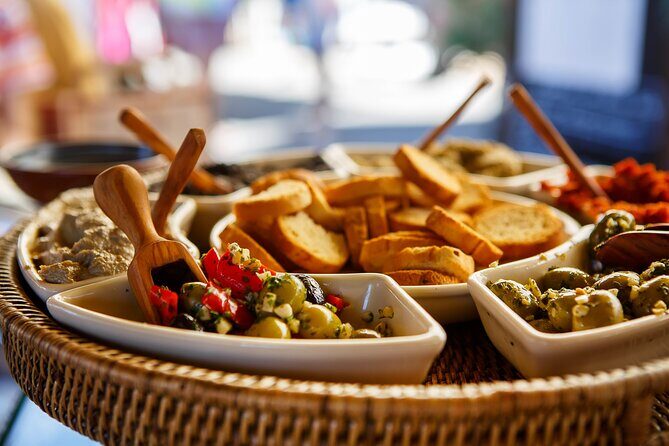
- At least five tastings: panisse, rosé, roasted cheese (including camembert in the local rotation), plus sweets
- Seasonal menu changes so you’re eating what’s freshest, not a fixed script
- Small group (max 10 per group; max 12 travelers) means less waiting and easier conversations
- History mixed into the walk with culture stops along the way, not a sit-down museum format
- Guide follow-up notes: some guides send a short list of favorite places after the tour
- Good for a first day in Marseille: it helps you understand neighborhoods fast, especially around the port
Marseille at 11:00: the pacing, meeting area, and group vibe
This is a walking tour that runs for about 3 hours 30 minutes, starting at 11:00 am. The meeting point is 66 Quai du Port, 13002 Marseille, and you’ll also see it described as easy to find near Rue Molière. That matters because Marseille can feel like a maze if you’re arriving cold—this keeps you from burning time just trying to locate the start.
Group size stays intimate. The tour is described as a maximum of 12 travelers, and it’s also framed as max 10 per group. Either way, you should expect a small circle rather than a cattle-car situation. That shows up in the reviews as well: people repeatedly talk about bonding with the group after a few tastings and chats along the route.
The tour is listed as good for ages 13 to 88, and that range makes sense for the format. It’s not a hike designed to test your willpower. Still, you are on your feet for several stops, so plan for typical city walking: comfortable shoes and a light layer for changing weather.
If you’re the type who hates standing around outside, here’s the practical note: food stops may have moments where you’re directed where to line up and sit, and the guide may not be hovering at every bite. One review complained the guide did not always talk during tastings. My advice: keep an open mind and treat the walk segments as your main time for conversation.
Other food & drink experiences in Marseille

What you eat: Provençal classics like panisse, rosé, and roasted cheese
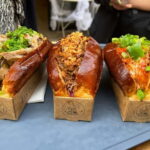
This tour sells itself as all-in on food, and the structure is simple: a local guide leads you around Marseille while you sample a sequence of bites. You should expect at least five different culinary delights. The exact set can vary with the season, but the core lineup stays very Marseille.
Here are the “anchors” you can reasonably expect based on what’s listed and what shows up in people’s descriptions:
Panisse (the original)
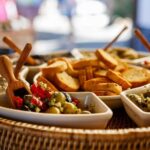
Panisse is one of those Marseille identities you can’t fake. It’s built around chickpea flour, and it shows up as its own stop (the tour specifically calls it the original panisse). In one cheese-focused tasting, people also mention chickpea flour crackers or a chickpea flour bread-style item. So you’re not just spotting a flavor—you’re tracing how chickpea becomes part of the whole meal rhythm.
Rosé and/or pastis pairing
You’re promised famous rosé, and the sample menu also calls out roasted cheese with Pastis. In plain terms: you’ll likely get a drink pairing that matches the savory bites, and yes, it can turn into a fun social moment. Multiple reviews mention the rosé glass helping complement the food, and others mention pastis as part of the experience.
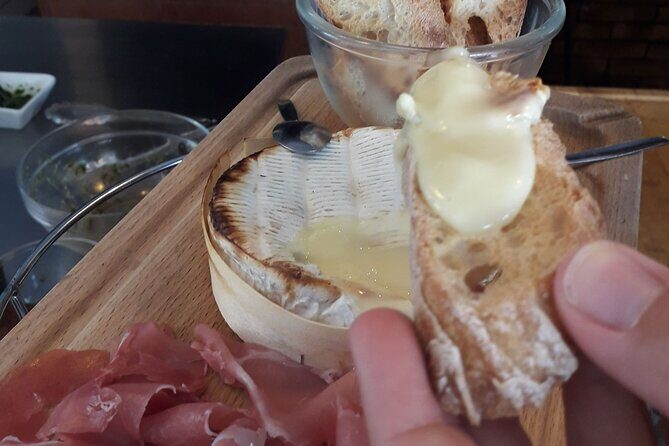
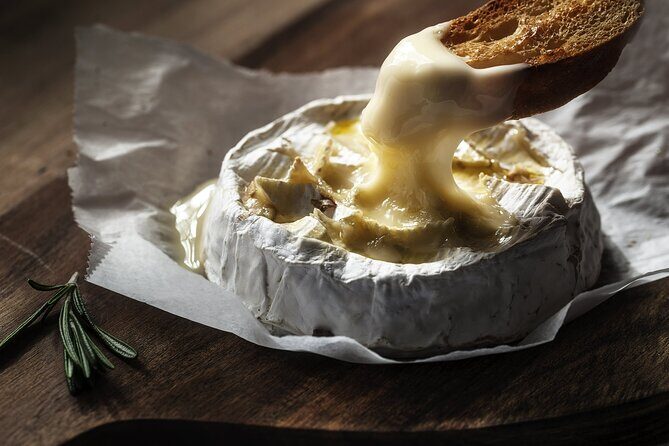
Roasted cheese (including roasted camembert)
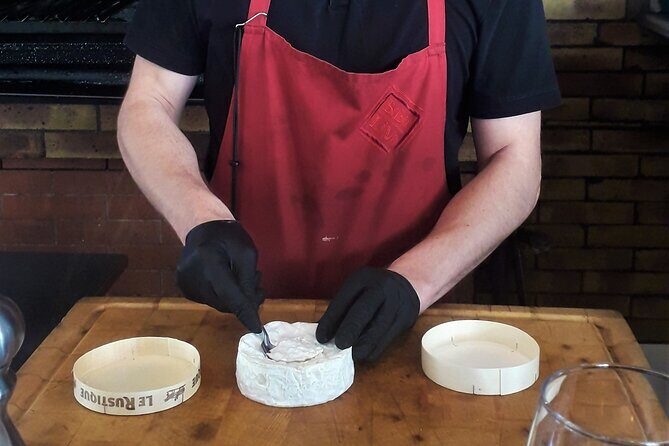
Roasted cheese is a major theme. The tour mentions roasted camembert cheese, and the sample menu includes roasted cheese with Pastis. One review described a stop with cheese plus aioli, crackers, and chickpea flour “bread.” Translation: you’re not just tasting a wedge of cheese on its own—you’re tasting how Marseille builds sauces and crunchy sides to make the savory part land.
Calissons
The sample menu includes traditional French calissons, which are a sweet treat from the Provence region. You can think of this as your cultural bridge: not every French sweet is from Marseille itself, but it fits the broader Provençal story the guide is trying to tell.
Oriental sweets (dessert stop)
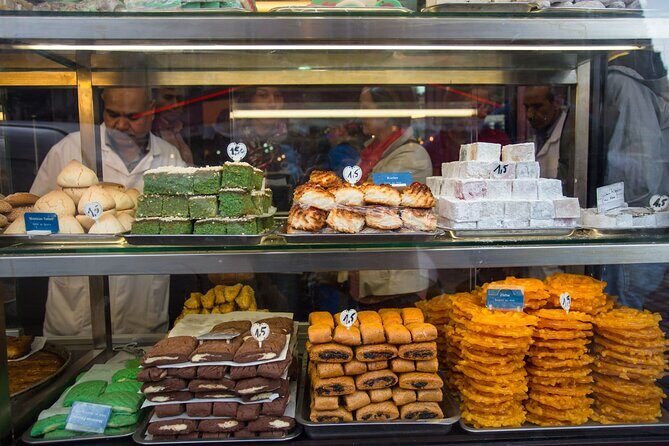
The sample menu lists oriental sweets for dessert. Marseille has deep ties to North Africa and the broader Mediterranean world, and dessert is where that influence shows up in a way you can taste without needing a textbook.
Because the menu is seasonal, you should treat this as a “style of tour” rather than a guarantee of the exact same items every day. Still, the flavor map is clear: chickpea-based Marseille specialties, Provencal sweets, and savory cheese pairings that keep you moving.
Stop-by-stop flow: how the tastings build into one full meal
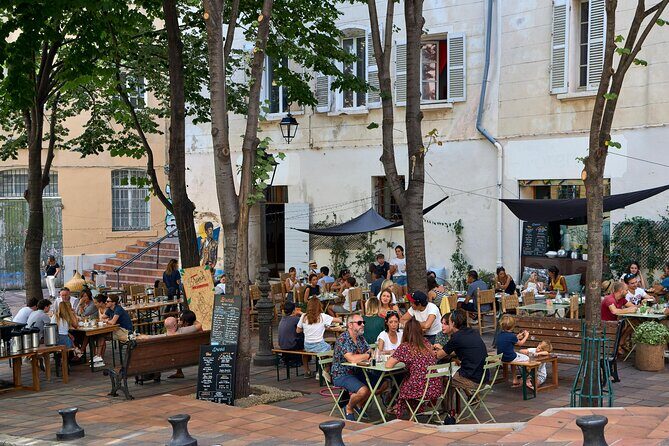
Even without a printed lineup in front of you, the tour runs like a sequence with a reason. Savory first, drinks and cheese mid-run, then sweets to finish. People explicitly describe it as five stops with three savory and two sweet. So if you like structure, this one has it.
First savory bite: panisse as your starting point
You start with a Marseille identity. Panisse is usually the kind of food people either instantly love or instantly go back for a second look. The benefit for you: it’s not just a snack. It’s a flavor base. If you’re getting your bearings for Marseille, starting with something local like panisse helps you understand why people brag about Marseille food in the first place.
Savory stop centered on cheese, aioli, and chickpea crunch
Next, you’ll hit the cheese portion. The menu mentions roasted camembert, and at least one cheese stop description includes aioli, plus crackers and chickpea flour bread. This is where the tour starts to feel like an actual meal rather than five separate appetizers.
The practical takeaway: eat slowly. Cheese and aioli are rich. If you try to power through, you’ll feel it later during the sweet portion. I like to save room by keeping water handy and not chugging the drink too quickly.
A few more Marseille tours and experiences worth a look


Drink pairing moment: rosé or pastis
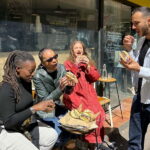
This is your reset button between bites. Reviews mention a glass of rosé that helps complement the food. Another review highlights pastis as part of the cheese pairing. Either way, the pairing makes the tasting feel intentional, not random.
If you don’t drink alcohol, you should still communicate that ahead of time. The tour requests that guests communicate any food restrictions, and that’s the right place to mention alcohol preferences too—at minimum you’ll get guidance on what’s possible.
Calissons: your Provençal sweet “breather”
Then you move toward sweets with calissons. Calissons are sweet, but they’re also a structured candy-like bite tied to Provence. This step matters because it gives you a change of pace after savory richness.
Final dessert stop: oriental sweets to wrap it up
You end on oriental sweets, which keeps the Mediterranean thread going. This last stop is often where people say they leave full. One review specifically says the group was full at the end, and another says the portions were more than enough.
So here’s my advice: don’t plan a heavy lunch right before this. You’ll likely want to arrive with enough hunger to enjoy the sequence without feeling stuffed by stop three.
The history angle: culture in motion, not a classroom
The tour promises both food and history. The reality is that the history is delivered while you walk and while you’re in and around food places. That works well if you want quick context tied to what you’re eating.
Some reviews mention that guides shared Marseille history and unique cuisine. One review praised the guide for being thorough and sending recommendations afterward, which suggests the history doesn’t end when the tour ends.
But there’s also a note of caution from a couple of experiences: if you want a lot more history time, you may feel you’re getting more food story than city-lecture. That’s not a dealbreaker; it’s just a mismatch of expectations.
My practical take: treat this as a “history via food” tour. If you want a full historical deep dive, you might pair this with a separate walking tour focused purely on architecture and major landmarks. But if you want something efficient—learning while eating—this hits the mark.
Price and value: what $179.51 gets you (and when it might disappoint)
At $179.51 per person, this isn’t a cheap snack. The value is in three things you can’t easily replicate on your own without planning:
- You get multiple tastings (at least five different culinary delights).
- You get pairings (rosé and/or pastis show up as part of the experience).
- You get a local guide who can translate what you’re eating and where it comes from.
Small group size also matters for value. With fewer people, you usually spend less time waiting and more time asking questions.
That said, one review rated it 3 out of 5 and called it disappointing relative to the price. They described two cheese stops and two dessert stops as not worth the cost, even though the guide was good. That complaint is usually a sign of expectation mismatch: if you hoped for a lot more history per minute, or a bigger variety of stops than what shows up on a given day, you might feel shorted.
So here’s the balanced decision rule I’d use:
If you want a convenient, guided way to eat a local lineup and leave full, the pricing can make sense. If your main goal is deep history or you’re very picky about the exact food stops, keep in mind the menu can change and the experience is food-forward.
Who this fits best in Marseille (and who should think twice)
This tour is a strong match for:
- First-timers who want to understand Marseille through taste, not just photos
- Food-focused visitors who like savory-to-sweet flow and local specialties
- Solo travelers—food tours are a fast way to talk to people, and the group size supports conversation
- Groups looking for bonding: rosé or pastis pairings help the mood, and the walking segments create shared time
The tour may be less ideal if:
- You need wheelchair access (it’s not wheelchair accessible)
- You want long history talks rather than short context tied to each tasting
- You have strict food requirements and need careful handling. The tour asks you to communicate allergies and special diets. If your restrictions are complex, message ahead and plan a backup.
On the bright side, the age range 13–88 suggests the pace and content are designed to work for many kinds of bodies and travel styles.
Practical tips so you enjoy every stop (instead of rushing)
A few small things will make a big difference:
Arrive hungry but not starving
Because you’ll likely get multiple savory bites and then desserts, don’t show up with a giant breakfast in your stomach. You want enough room to enjoy cheese without feeling punished by the next sweet stop.
Wear comfort, not fashion
You’re walking between places in the port-area streets. Comfortable shoes beat heel bravery.
Message food restrictions early
The tour explicitly requests you communicate allergies and special diets. Do it when you book, not after you arrive.
Ask your guide about the day’s substitutions
The menu is subject to change with the seasons. If you care about a specific item like panisse or calissons, ask what’s on the day’s rotation.
Expect a guide-led pace, not a free-for-all
With small groups, you still need to follow timing between stops. This is part of why people end full and happy rather than stuck searching for each place on their own.
Use the post-tour recommendations if you get them
Some guides send a list of favorite places afterward. If you receive one, save it. Marseille has more good meals than you can count in a single day.
Should you book this All Inclusive Food & History Tour of Marseille?
Book it if you want an efficient, guide-led way to taste Marseille. The best version of this tour works like a mini meal with story: panisse gets you into the local identity, roasted cheese and chickpea sides show the city’s savory personality, and rosé/pastis pairings keep it playful. The desserts—calissons and oriental sweets—finish the job so you leave full and with a clearer mental map of the city.
Skip it (or pair it with something else) if you need heavy history content, or if you’re counting on the exact same food lineup every time. Since the menu changes by season and the experience is food-forward, your enjoyment will depend on what’s on the rotation that day and how hungry you are for flavor over lectures.
If you’re flexible, this is a smart first-day plan: you’ll eat well, walk some beautiful streets near the port, and learn enough to make your next meal choices feel confident.
FAQ
Where does the tour start?
The meeting point is 66 Quai du Port, 13002 Marseille, France. The tour ends back at the meeting point.
What time does the tour start and how long is it?
It starts at 11:00 am and runs for about 3 hours 30 minutes (approx.).
How many people are in the group?
The tour lists a maximum of 12 travelers, and it also notes a max of 10 per group.
Is the tour wheelchair accessible?
No, it is not wheelchair accessible.
Is the tour offered in English?
Yes, it’s offered in English.
Do I need to communicate food allergies or dietary needs?
Yes. The tour asks guests to communicate any food restrictions such as allergies or special diets when booking.